This is a pen and ink piece I did way, way back in high school. Looking at it now, some of the line work is sloppy, but I think it still holds up.
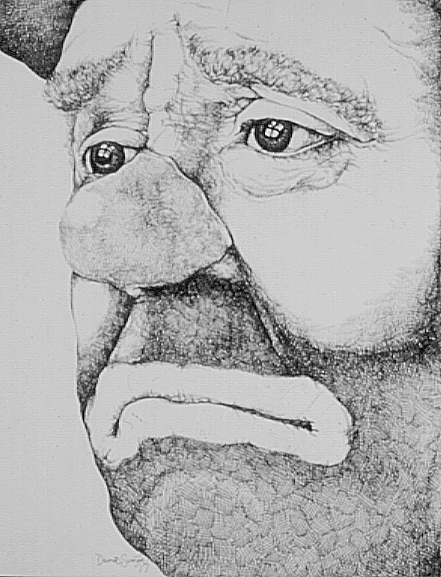

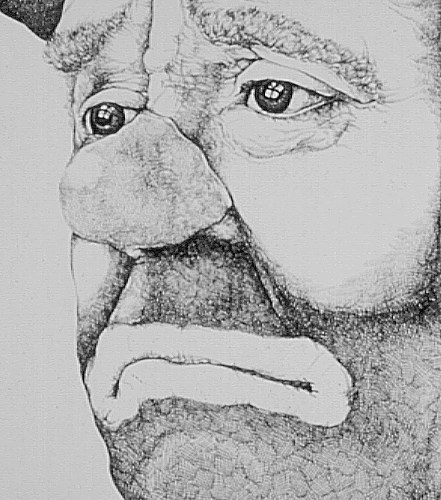
This is a pen and ink piece I did way, way back in high school. Looking at it now, some of the line work is sloppy, but I think it still holds up.
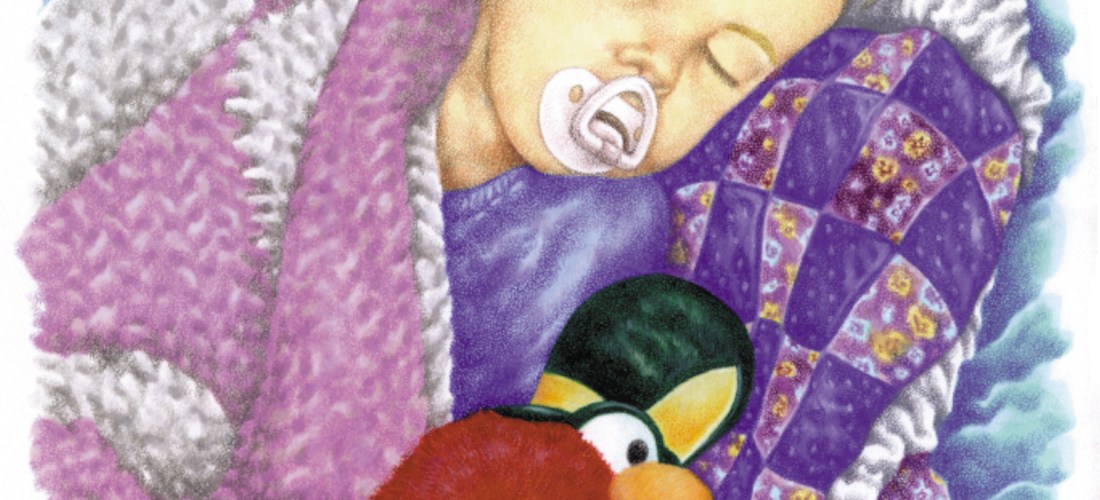
I drew this of my daughter Hannah when she was a toddler. She’s now 24, almost 25 years old. Damn, I’m getting old.

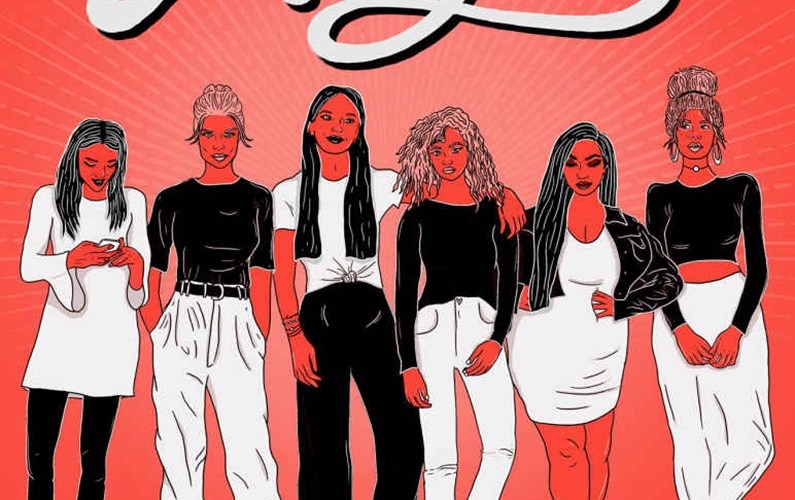
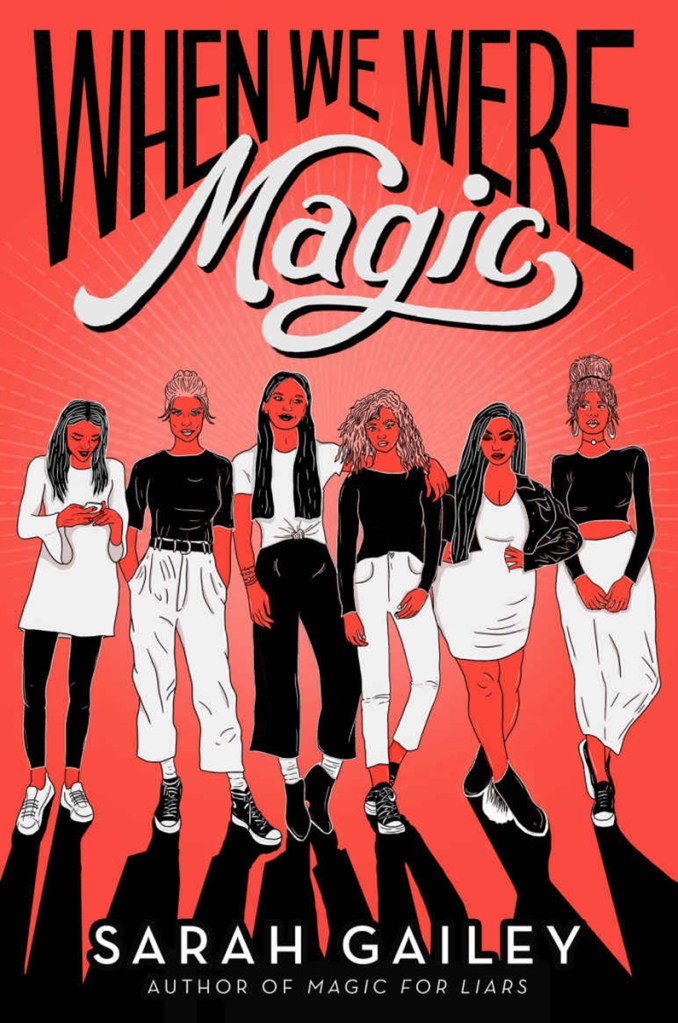
I’m not big on long play-by-plays when it comes to book reviews. For myself, I prefer being surprised by the twists and turns a novel takes in getting from front cover to back cover. So this is all you’re going to get in terms of plot: When We Were Magic revolves around six friends who all share the ability to do magic, and one boy who is dead, accidentally, at the hands of one of those friends.
The other thing you need to know—this novel just may be my favorite read of the year, and it’s been a pretty good year so far. It’s being marketed as YA, and while it’s true that nearly all the characters are teenagers, I would recommend it to anyone who reads genre fiction. This is the fifth book by Sarah Gailey I’ve read, and each one has impressed me. Their world-building is well thought out, exactingly rendered, and intriguing. When each book ends, I find myself wanting to go back to that world again, immediately. Gailey creates fully rounded, wonderfully quirky characters, each with distinctive personalities. They do not truck with stereotypes. Their treatment of gender is a masterclass in sensitivity and inclusivity.
Gailey does all of those things in this novel, maybe even better than in their previous books. Two things I especially want to call out for special mention—their treatment of magic, and of friendship.
Magic, as presented here, is truly awe-inspiring. Each friend can do general magic, and also has a special talent unique to them. When they cast spells together, Gailey’s descriptions of cooperative magic, the way they work together, twining their talents, is quite simply beautiful. The other thing is, these girls are still learning about what they’re capable of. They’re not wizened, powerful wizards, bored with their immense powers. They are discovering their limits, or lack there of, and experience both wonder and fear as a consequence. Through their eyes we, as readers, get to experience that wonder and fear as well. So good!
If magic is one pillar this novel rests upon, then friendship is the other. These six friends have complicated, sometimes fraught relationships that feel real and lived-in. There is love, and lust, and jealousy, and the supreme joy of knowing that no matter what happens, this circle of friends will have your back. Gailey pulls this off with downright giddy assurance.
I finished When We Were Magic late last night, and have already recommended it to half a dozen friends and family members. This one is special.

As you may have noticed by now, I blog about writing, drawing and books. That’s it, pretty much…at least until now.
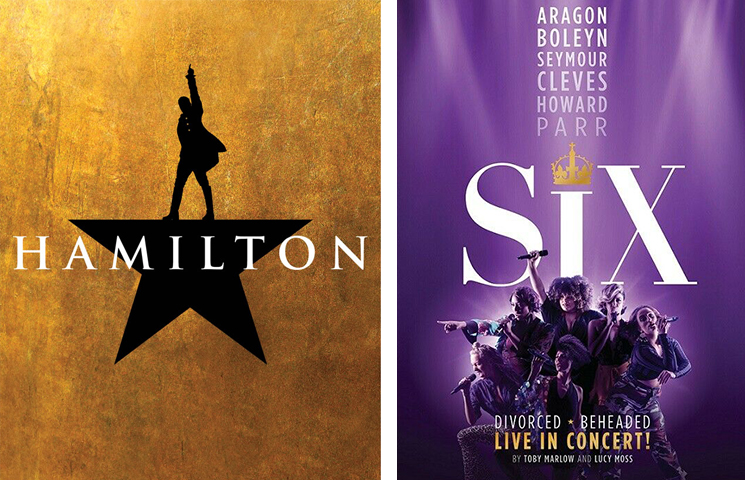
I spent this past weekend in New York City with my family, and we saw two shows—Hamilton and Six. After giving it some thought, though, I think this post is actually right at home here. The thing is, both of these shows are, for want of a better word, literary. Let me explain.
Hamilton has been around for long enough, and earned enough accolades, that even if you haven’t seen it, you probably have a general feel for what it is and what it’s about. Yes, it’s about Alexander Hamilton. But to me, most importantly, it’s about the power of words. The point is stressed, over and over again, that Hamilton both read and wrote obsessively. As one song says explicitly, Hamilton writes like he’s running out of time.
Not surprisingly for a show about the power of words, about the ability of language itself to inspire, ignite and rabble-rouse, Hamilton itself is drunk and besotted with words. The songs, many of them rapped, are dense with word-play, with rhymes inside of rhymes inside of rhymes. Lin Manuel Miranda is above all else a writer in every sense. This show must have more words per minute than any other show in Broadway history, and every word matters. Miranda has accomplished something rare and special here. I was going to say something really cheesy here, like he has not thrown away his shot, but that would be…well, I guess I just said it. Sorry.
Six is not nearly as well known. It started out in London, had a run in Chicago, and has only been on Broadway for a few weeks. If you haven’t heard of it, here’s how I describe it: Imagine if the six wives of Henry the Eighth were reincarnated as the Spice Girls and told their collective history, from their point of view, in song. Rather than rap, the songs are exuberant eighties pop, but they share similar DNA with the songs in Hamilton in that they’re clever, filled with word-play, and share a message of empowerment that’s sorely needed right now.
One other thing. Based on the crowd reaction, this show is going to be huge! I’m talking Beatlemania level excitement, which it well deserves.

John Scalzi has become one of my most reliably favorite authors, thanks predominantly to the Old Man’s War series of novels. They are military space opera in the best sense, with big world building, characters you come to truly care about, and exciting battle scenes. These novels are worthy successors to Joe Haldeman’s Forever War (one of my favorite novels ever) and Robert Heinlein’s Starship Troopers (minus Heinlein’s troublesome politics and misogyny).
Lock In is a different animal completely, but I really enjoyed it. Published in 2014, it’s set in the aftermath of a global pandemic, which is a little eerie given current circumstances. Lock In is a police procedural built around a meticulously rendered near future science fiction setting. Scalzi excels at this kind of world building, with absolutely believable, and absolutely terrifying, science that is complex yet easy to understand. Given everything I’ve read by Scalzi, I’m not surprised that the science fictional aspects of the story are riveting. What makes Lock In such a pleasure to read is that the murder mystery and subsequent investigation at the heart of the story is equally satisfying.
If you’re a fan of hard science fiction, police procedurals, or both, give Lock In a try.
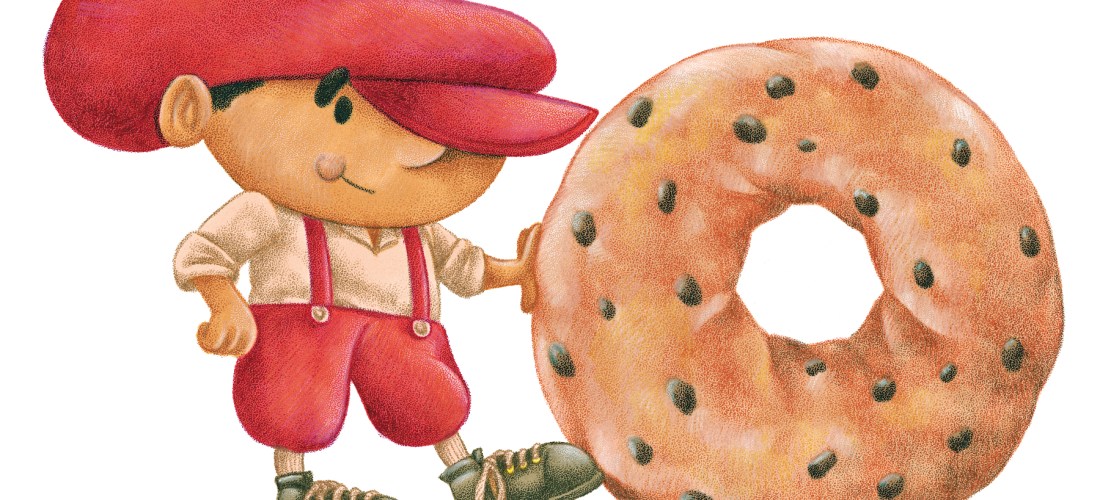
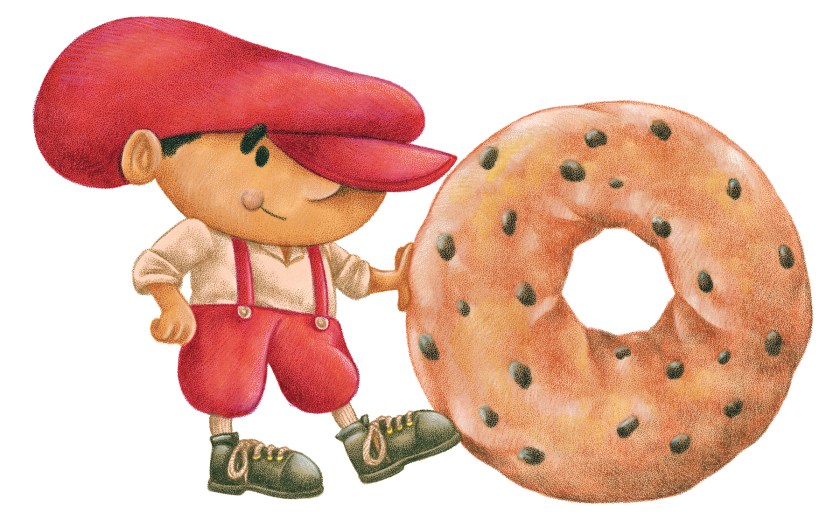
This was designed as the advertising mascot for a bagel shop called The Daily Bagel.


I’m really proud of this short story. It first appeared in a middle-grade anthology titled Side Show 2: Tales of the Big Top and the Bizarre.
CLOSING FOR THE NIGHT
Darkness crept up on the carnival like an old tom, slow and easy. A sign hung over the entrance gate: JOJO’S ALL-MECHANICAL CARNIVAL. The sign hung sideways, a confusion of peeled paint and rain-warped wood, the colors washed out by the passing years.
Gent permitted himself a faint metallic sigh as he rose to his feet. He let the rocking chair fall back and settle itself. Another night, another closing. Knee joints squeaking, Gent walked down the three wooden steps to the parade grounds. It had rained earlier in the day, and the ground was still muddy. Water splashed up to soak the edge of his tattered cape, and brown-spotted his tarnished brass legs.
The small clapboard house that was Gent’s home sat in the shadow of the Ferris wheel. He pulled back on the switch, and the big ride ground to a halt. Lights, the ones that still worked, blinked out one by one along the wheel, dropping it into silhouette.
Gent made his way from ride to ride, shutting them down. At the merry-go-round he had only to turn off the music. The ride had long-since ceased to turn. The tape was worn, and the tinny melody ground out slowly, in fits and stops. Gent let it play for a while as he wandered through the patterned labyrinth of his memory, where laughing knights rode to battle on their gaily painted steeds, and the music rang out to announce their coming.
So many memories. Gent had been the caretaker of the carnival in its heyday. He had strolled through the crowd, joking with the men, complimenting the women. His pockets were always filled with candy for the children. Gent’s sculpted ivory handlebar mustache curled to pinwheels at the ends. His ivory hair cascaded to his shoulders like the froth of a mountain stream. His white top hat was always tipped in greeting.
Gent shook himself, alarmed to hear a loose rattling sound. Enough. He had a job to do.
He stopped the last ride, then crossed to the long, low sideshow building. The crude paintings on the outside had worn away, leaving only the barest outlines of the spider girl, the lobster man, the bearded lady, the alligator boy, the many others who had steadily pulled in the marks.
Jojo had at first tried mechanical sideshow attractions, but it had not worked out. People came to a sideshow to be repulsed and shocked. Mechanical attractions could not do that. So he brought in human performers, the best, pulling them out of retirement in a celebration of deformity. The customers did not seem to mind that this one aspect of the carnival was not mechanical, and Jojo saw no reason to change the sign.
Open resentment existed between the humans and the droids, at least at first, but year by year their relationship mellowed. Gent felt true sadness when they left. They were all gone now, left with the last wave of colonists, gone to the stars.
Gent entered the sideshow. He walked down the row of parted, threadbare curtains to a small booth at the end. The only one who had not left—a two-headed baby floating in a large jar of formaldehyde. Its limbs had atrophied, skin wrinkling back from bone. Four eyes glistened like milky pearls. It stared into the darkness, lips pursed in identical frowns.
Gent had put off giving the baby a proper burial. It was his last, pitiful link with humans.
The slow, mournful wail of a harmonica drifted in on the night breeze. Gent left the sideshow behind and headed for the midway. This was the worst part of closing for the night. His fellow droids, the ones still operating, were all too human in their suffering.
Gent followed the sound of the harmonica to behind the first trailer. Kentucky’s brass skin had been inlaid with polished teak. Now the teak was discolored, the brass spotted, but a black felt derby still perched on his head.
Kentucky tipped his derby as Gent came into view. He dropped the harmonica into his lap. “Good sir, would you sit for a story? A bit of excitement to color this drab evening?” Gent heard a note of pleading in his voice.
Kentucky was a storyteller. It had worked fine in the old days. People would wander around back of the trailer, pulled in by the haunting sound of the harmonica. When enough had gathered, Kentucky would begin. He knew a thousand stories. Tall tales and breathtaking adventures, stories to quicken the pulse and touch the heart. Pirates and ghosts, fair maidens and fire-breathing dragons, dastardly villains and heroic children.
And if the crowd thus gathered was just right for the pickpocket’s trade, it was a fair price paid for the entertainment given.
“Not tonight, Kentucky. Tomorrow. Right now, it’s time to shut down.”
Kentucky grabbed Gent’s arm, held tight. “Please, Gent. I’m getting tired of telling myself the same old stories every day. I need to look in someone’s face and see them smiling, or crying, or anything! The back of this trailer ain’t much of an audience.”
“Yeah, Kentucky, I know. And you’ll have an audience, just wait, they’ll be back. But right now it’s time to shut down.” Gent slid his hand to the back of Kentucky’s neck and eased down the switch. Kentucky drooped forward. The brightness in his eyes died and his arms dropped into his lap. Gent curled the fingers of one hand around the harmonica.
Gent never got used to the wide, desolate midway. Without a laughing throng of people, it was just sad. All that’s missing are tumbleweeds, he thought.
The gaming droids had long ago rusted away. They were buried in the plot of swampy land beyond the row of trailers. They had never been more than simple machines. Jojo knew that no droid, no matter how complex, could top a human hawker. But the sign said ALL-MECHANICAL, and except for the sideshow it was so.
The gaming droids had squatted on casters and shouted, “Try your luck!” in a hundred different voices as they proffered darts and balls, rings and hoops. When the people left for good, they rolled into corners and shut down. Perhaps, Gent thought, they were the lucky ones.
Most of the trailers along the midway were tightly shut, the heavy corrugated shades pulled down and welded in place. Gent made his way past them, to the lair of Stupendo the Great.
Stupendo sat back in shadow, his cape billowing, his high top hat tilted at a jaunty angle. Stupendo had been a marvel in his day. His golden hands flashed to and fro, creating illusion after illusion with dizzying speed. His polished obsidian eyebrows were always raised, as if in surprise at his own mastery. Now when Stupendo moved into the light, Gent saw that the top hat was brimless, the cape a rag. His left eyebrow had broken off. And scrambled circuits, besides.
Stupendo fanned an incomplete deck of tattered playing cards before Gent. “Pick a card, any card at all.” Gent smiled as he took a card. The three of hearts. Stupendo tapped the deck with his magic wand. “Ah ha!” he shouted triumphantly. “Your card is…the queen of spades!”
Gent smiled again as he slipped the card back into the middle of the deck. “Right again, as always. But now it’s time to shut down.” Stupendo chuckled to himself as Gent flipped the switch.
Gent made a wide detour around the geek pit. When the geek had ceased to function, they had left the body there, unable to lift it from the pit. It lay there now, overgrown with fern and ivy, surrounded by the bones and severed skulls of chickens and rats.
The geek had been a prime draw. Built with its software purposely corrupt, it was a wild thing, truly dangerous, and the deep pit with its close-set bars across the top was a necessary precaution. Its iron skin bristled with spiky hair. Its body was corded with muscle, arms long and snarled. It walked with the sideways gait of an ape. Its eyes burned with a red, hateful fire.
To Gent had fallen the task of running the geek show. Four times a day he stood on the bars over the center of the pit and gave his spiel. Then, averting his gaze, he dropped in a live chicken, or a sleek black rat. The geek would fall on the animal with a guttural roar. Grasping the animal at the neck with steel teeth, it would shake its head back and forth in a frenzy until head parted from neck in a bloody shower. Foam running down its chin, the geek would proudly display the headless, jerking body. Men screamed and women fainted, but they kept coming back for more.
Gent was dragged back to the present by a shrill, cackling laugh. Madame Blatsky, the only other droid still living, and she was raising a ruckus.
By the time Gent reached her trailer, Madame Blatsky had quieted down, though her eyes still sparkled, and her carved mahogany cheeks seemed flushed if that were possible. Madame Blatsky reclined in a womb of Turkish rugs, the colors now muddled and indistinct. The faded sign above her read, Madame Blatsky, Palms Read, Fortunes Told, Prophesies Given.
Before Gent could say a word, Madame Blatsky began to talk, and the words poured out like thin wine from a goblet. “I saw a vision! They’re coming back, the people are coming back, they’re coming in their great silver ships, and they’ll reward us for waiting. They shall bedeck us in riches, in fine silks and spun gold, they’ll encrust our bodies with jewels and precious metals, and they’ll carry us in splendor…”
Gent turned her off. It was always the same. Each day she shut down her senses and entered a trance. At twilight she woke with a yell, convinced she’d had a vision. Madame Blatsky had begun to believe in herself. At least she still had some faith, some hope.
Gent made his way slowly back to his house. Tonight had been a bad one. They were all nearing the edge, and it was only a matter of time before they slipped over. Perhaps they had been built too well. Loneliness, Gent thought, is a curse that man could not have wished upon us.
Gent looked up as a tendril of cloud snaked across the moon, sending a shadow racing along the ground toward the merry-go-round. He closed his eyes. For a brief moment it had looked just like a small child running to catch the ride before it began.
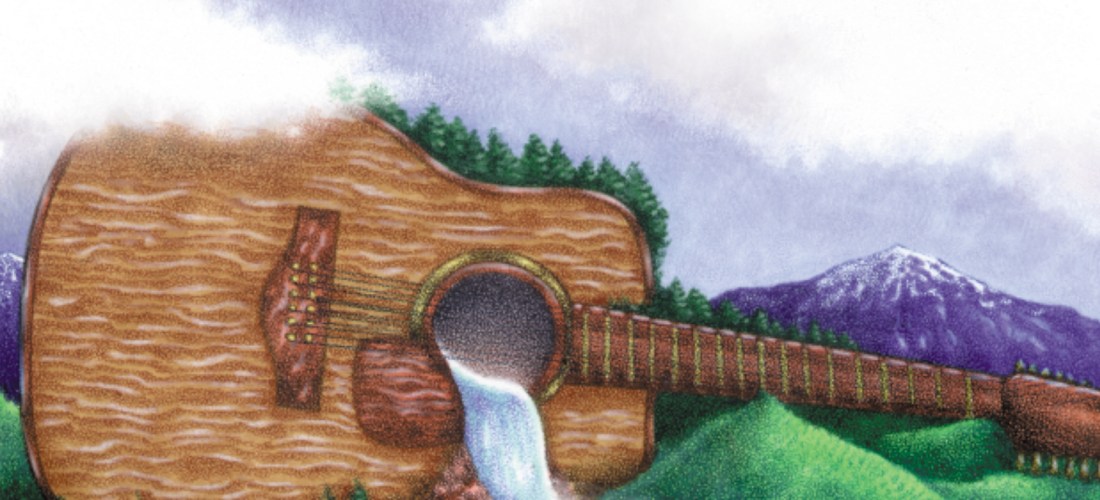
I did this for a CD cover—instrumental bluegrass versions of Creedence Clearwater Revival songs.

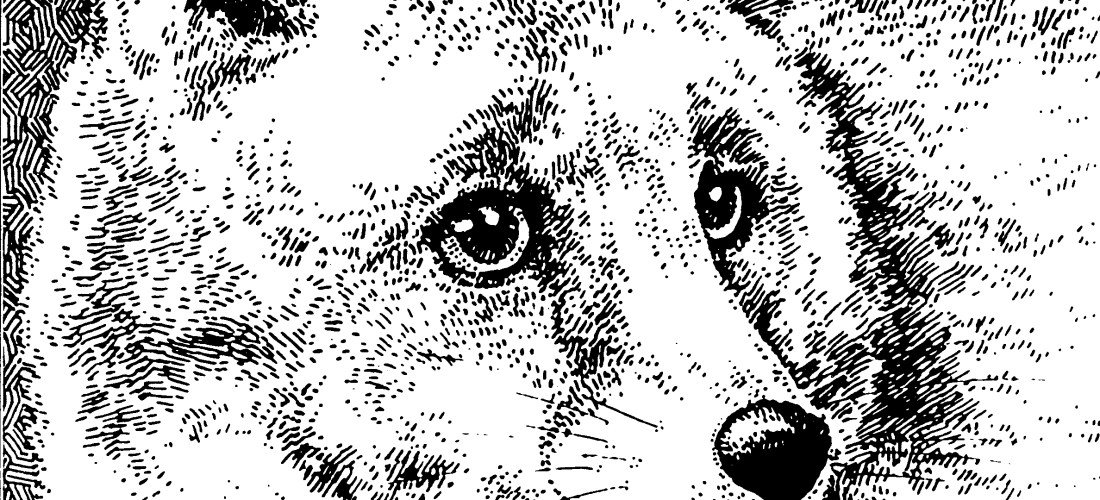
Just a quick pen and ink sketch of a snow fox. I love drawing animals. With this one, I was playing around with working without any outlines.

This story was first published in an anthology titled Nasty Snips, a collection of short horror. This one is indeed short, clocking in at a little over 500 words.
BAGGED
It was the witch’s fault.
There were other contributing factors. Paul’s friends had convinced him that a new club in the Industrial Flats was the place to be for a steamy summer night costume party. They had goaded him into wearing the wool Sherlock Holmes costume that was now causing him to sweat and itch uncontrollably. Yes, his friends were partly to blame. And alcohol had been involved; enough said about that.
It was the sight of the witch across a dance floor crowded with trendy, costumed partiers, however, that had caused his present predicament. He had caught just a glimpse of her; alabaster skin, raven black hair that refracted the spinning lights like a prism, the flash of a slim yet curvy body between the folds of her black satin cape. Beneath the cape a Moebius strip of leather, lace and chrome that revealed more than it concealed. Her boots were leather, intricately laced; wickedly high heels that pulled the sleek muscles in her calves taut. She held a mysteriously oversized black leather purse protectively against her body.
The witch was dancing by herself, spinning in slow, looping circles. Her body seemed to catch and hold the music, like each note was her own private lover. Paul watched her with an attraction that bordered on physical need; he felt like a small planet in orbit around a novaed sun. Their eyes caught just once. She held his gaze with eyes the color of anthracite, until he had to look away, dizzy.
When she left the club Paul followed, helpless.
He was lost. Paul had no idea how long he had been following the witch. It was as if he was hypnotized by her impossible beauty, a moth drawn to her black flame. He vaguely remembered scrambling up and over a concrete bridge abutment, scraping his hands raw on the rough edge. He had crossed a railroad trestle above water mossy green in the moonlight, making his frightened way in the dark from one precarious foothold to the next. There was a long-deserted factory, rusted scrap metal piled into angular mountains. The witch moved with fluid grace, always too far ahead to catch, yet always in sight. At some point, they went underground.
The witch stopped. Paul stepped into a cavernous room where old fluorescent lights sputtered fitfully, sending hard-edged shadows careening across the space. Shapes moved in the darkness all around him. As they staggered into the spastic light, the shapes became people, dozens of them, dressed in rags and cast-offs. They carried bags or pushed squeaky shopping carts filled with bags and trash. They’re just bag people, Paul thought, and started to laugh. He had been spooked there for a minute.
The first rock caught him by surprise. He was on the ground before he realized what had happened, blood running into his eyes. They advanced methodically, stoning him with surprising precision. When they stopped, the witch was standing in front of him, smiling. She set her bag down next to him with great care. Something moved inside it.
The last thing Paul saw before his connective tissue began to dissolve was the creature that oozed from the bag. It wrapped its many arms around his body, releasing a fluid that burned like napalm.
When Paul’s body was suitably prepared, the witch’s master laid eggs in the flesh jumble. The bag people danced long into the night, in celebration of the birth to come.
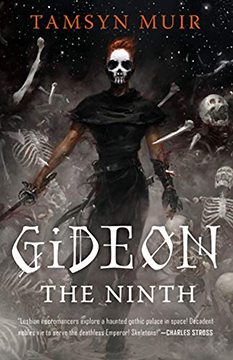
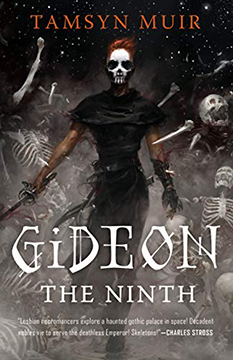
Honestly, the cover blurb from Charles Stross is a perfect distillation of Gideon the Ninth: “Lesbian necromancers explore a haunted gothic palace in space! Decadent nobles vie to serve the deathless Emperor! Skeletons!” There’s more of course, so much more, but one of the many pleasures of reading this gonzo masterpiece is discovering for yourself what happens, so I’m going to leave it at that, except to reiterate—skeletons! So many skeletons, so many bones, so much bone and blood magic. Yes, I said magic, but this is most definitely a science fiction novel, with rigorous scientific world building.
Since I’m leaving the delights of the story for you to discover, what I want to talk about here is voice, that mysterious thing that makes a writer sound like no other. Holy shitballs, Tamsyn Muir has a voice unlike any author I have ever read. Reading this novel is like riding a roller coaster without being strapped in, part terrifying funhouse, part fever dream, all startlingly original. Muir writes sword fights (Did I mention there are sword fights? There are sword fights!) with thrilling precision. Her action scenes are heart-stopping.
There are something like twenty characters roaming the crumbling halls of Canaan House, the novel’s setting, and not a stock cliche in the bunch. Each of them are fully realized people, with unique personalities, styles, talents, and many, many secrets. Another thing—our two main characters, Gideon and Harrow, are still teenagers, and despite having formidable powers and skills, they are still recognizably teenagers. They are snarky. They develop crushes, even under the most dangerous circumstances.
I have to mention the dialogue. It is sharp-tongued and profane, and often feels utterly modern. Muir is walking a tightrope without a net, and it shouldn’t work at all, it really shouldn’t, but damn, it works beautifully. I found myself reading the dialogue out loud, a big smile on my face.
This is Muir’s first novel, and the first fiction I’ve read by her. I can’t wait to read more. Happily, Gideon the Ninth is the first novel in a trilogy, and book two, Harrow the Ninth, is coming out this year.
One final note. The ending of this book broke me in ways I haven’t completely processed yet.
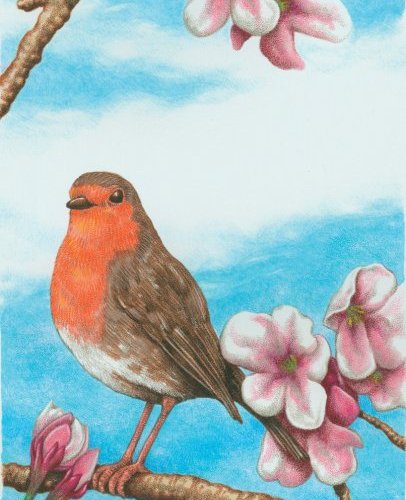
Not much to say here, this is pretty much what the title says. For just about all of my colored pencil work, I do a base layer of markers, then colored pencils on top. I like the rich colors I get with this technique.
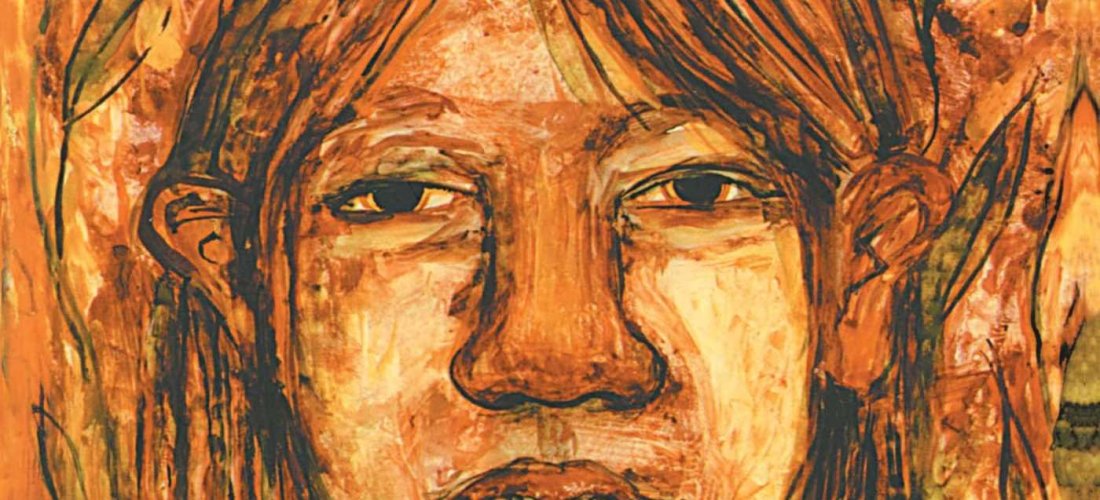

More of my favorite opening lines. I had fun with this last time, so I’m coming back for more. I like some of these for the language, some for the way they draw you immediately into the story, some because they tell you so much, and some because they tell you nothing at all, but make you want to know more.
NEUROMANCER, WILLIAM GIBSON:
The sky above the port was the color of television, tuned to a dead channel.
(I love this, but weirdly for what was, when written, bleeding edge cyberpunk, this hasn’t aged well since most folks no longer have dead TV channels.)
1984, GEORGE ORWELL:
It was a bright cold day in April, and the clocks were striking 13.
THE LOVELY BONES, ALICE SEBOLD:
My name was Salmon, like the fish; first name Susie. I was fourteen when I was murdered on December 6, 1973.
A HITCHHIKER’S GUIDE TO THE GALAXY, DOUGLAS ADAMS:
Far out in the uncharted backwaters of the unfashionable end of the Western Spiral arm of the Galaxy lies a small unregarded yellow sun. Orbiting this at a distance of roughly ninety-eight million miles is an utterly insignificant little blue-green planet whose ape-descended life forms are so amazingly primitive that they still think digital watches are a pretty neat idea.
CRUDDY, LYNDA BARRY:
Dear Anyone Who Finds This, Do not blame the drugs.
2001: A SPACE ODYSSEY, ARTHUR C. CLARKE:
Behind every man now alive stand thirty ghosts, for that is the ratio by which the dead outnumber the living.
THE MARTIAN, ANDY WEIR:
I’m pretty much fucked.
SLAUGHTERHOUSE FIVE, KURT VONNEGUT, JR.
All this happened, more or less. The war parts, anyway, are pretty much true. One guy I knew really was shot in Dresden for taking a teapot that wasn’t his. Another guy I knew really did threaten to have his personal enemies killed by hired gunmen after the war. And so on. I’ve changed all the names.
WE HAVE ALWAYS LIVED IN THE CASTLE, SHIRLEY JACKSON:
My name is Mary Katherine Blackwood. I am eighteen years old, and I live with my sister Constance. I have often thought that with any luck at all I could have been born a werewolf, because the two middle fingers on both my hands are the same length, but I have had to be content with what I had. I dislike washing myself, and dogs, and noise. I like my sister Constance, and Richard Plantagenet, and Amanita phalloides, the death-cup mushroom. Everyone else in my family is dead.
CHOKE, CHUCK PALAHNIUK:
If you’re going to read this, don’t bother.
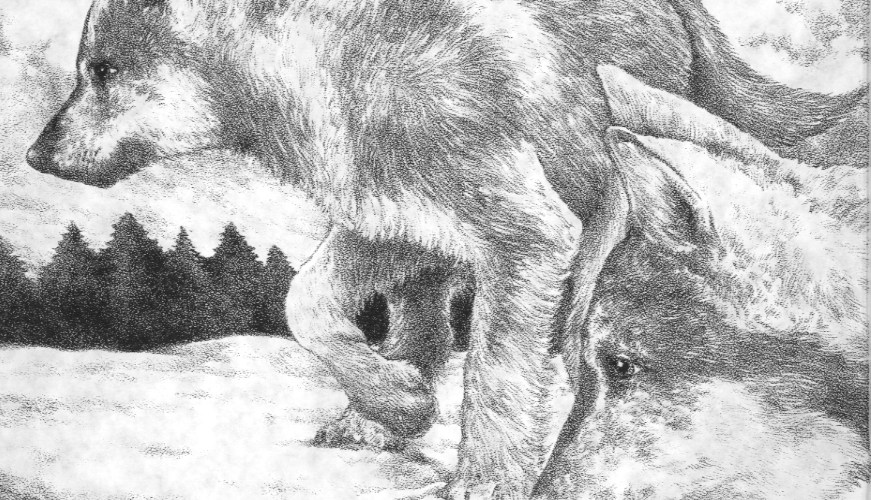
This is black Prismacolor pencil on coquille paper, which has a pebbly texture I really like.

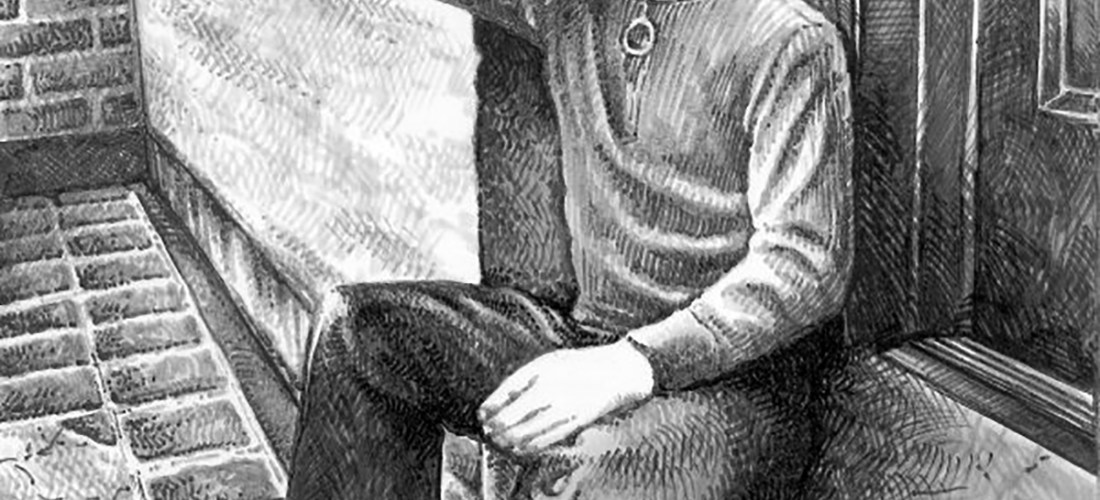
I did this marker rendering as part of a magazine re-design. I really enjoy working with markers.
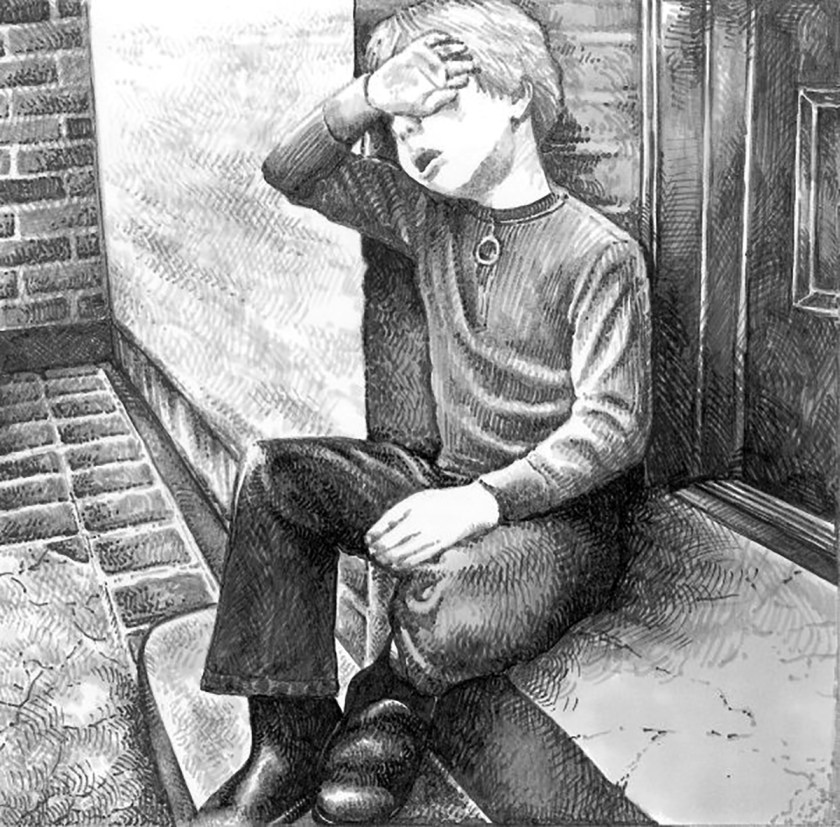
Why do writers write? That question comes up once in a while on the Twitter #WritingCommunity, and as you may imagine the answers are as varied as the folks answering. Some write for that elusive fame and glory, some to illuminate a particular passion, some because it feeds the creativity monster that lives inside them. For me, the answer is pretty simple. Writing makes me happy. I’ve been doing it since roughly junior high, and I still get a happy little rush from crafting a pretty sentence. And on rare occasions, when my brain is bubbling with ideas and words are sparking out of my fingertips at a feverish pace, that happiness approaches something very much like joy. I can reach that same joy by drawing but it’s trickier, because there are more tools involved, more variables between my brain and the final result.
There’s another reason people, including me, write, and that’s because they have to. Because the act of writing keeps the darkness at bay, because it expels inner demons, because it brings relief and release. They use writing to work through issues, and maybe so that they don’t surrender to those issues. They write because it’s better than screaming into the void.
Looking back at my own work, I can recognize the moments when I wasn’t writing for fun, but was instead writing to alleviate…something. It might be an entire story, or a poem, or just a fragment or even a single line. To the reader it may not be readily apparent that I wrote those words as a way to exorcise some beast clawing at me from within, to justify or maybe apologize for an experience that haunts me. I can see it, though. I remember.
I’m not, as a rule, particularly tortured. I have led, and continue to lead, a relatively happy and fulfilling life, with a loving family and good friends. That doesn’t mean the hopelessness never comes to call. I’m lucky in that, when it does, when I’m feeling overwhelmed, I have a way to battle back. I don’t think I’m at my best in those cases, when I’m tearing the words out of my soul one barbed letter at a time. To me, my best writing happens when the creative flow is wide open and I’m just going along for the ride. But I cherish each and every one of those painful sentences.
It’s comforting to know that the next time the darkness descends, words are waiting to shield me.

I love short stories that pack a punch—emotionally, intellectually, even viscerally. Stories that may take only a short time to read, but stay with you for days afterwards. These are a few of my favorites:
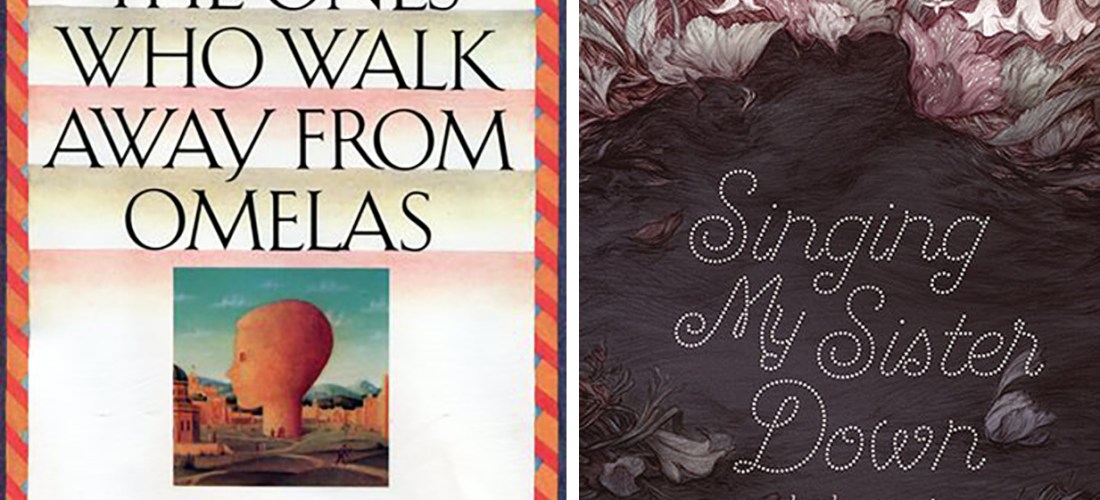
THE ONES WHO WALK AWAY FROM OMELAS by Ursula K. LeGuin. Only a few pages long, but what an amazing few pages. Ones of the finest short stories ever written in the English language, don’t @ me.
Click to access 3.-Le-Guin-Ursula-The-Ones-Who-Walk-Away-From-Omelas.pdf
SINGING MY SISTER DOWN by Margo Lanagan. This is the first piece of fiction I ever read by Lanagan, and she’s now one of my favorite writers (check out her miraculous novel, Tender Morsels). This is a shattering piece of anthropological storytelling that does not give up its secrets easily.
Click to access Singing%20My%20Sister%20Down%20by%20Margo%20Lanagan.pdf
PONIES by Kij Johnson. This deceptively simple story of a young girl’s party is a kick in the gut wrapped in cotton candy. I remember giving this to my son to read when he was in high school, and he said to me, “This isn’t a fantasy, it’s a documentary.” If you were ever bullied, particularly in middle school, Ponies should maybe come with a trigger warning.
I can’t link to this one, but it’s available to read on Tor.com. Go check it out, I’ll be here when you get back.
MAN FROM THE SOUTH by Roald Dahl. I imagine more people know Roald Dahl for children’s books like Charlie and the Chocolate Factory and James and the Giant Peach. While all of Dahl’s kids’ books have a deep undercurrent of darkness, it’s in his adult short stories that the darkness truly bubbles to the surface. This one has been adapted for both television and the movies, but it’s the original story, particularly the final sentence, that will send a shiver down your spine.
Click to access man-from-the-south.pdf
SURVIVOR TYPE by Stephen King. Auto-cannibalism. That’s all I’m gonna say.
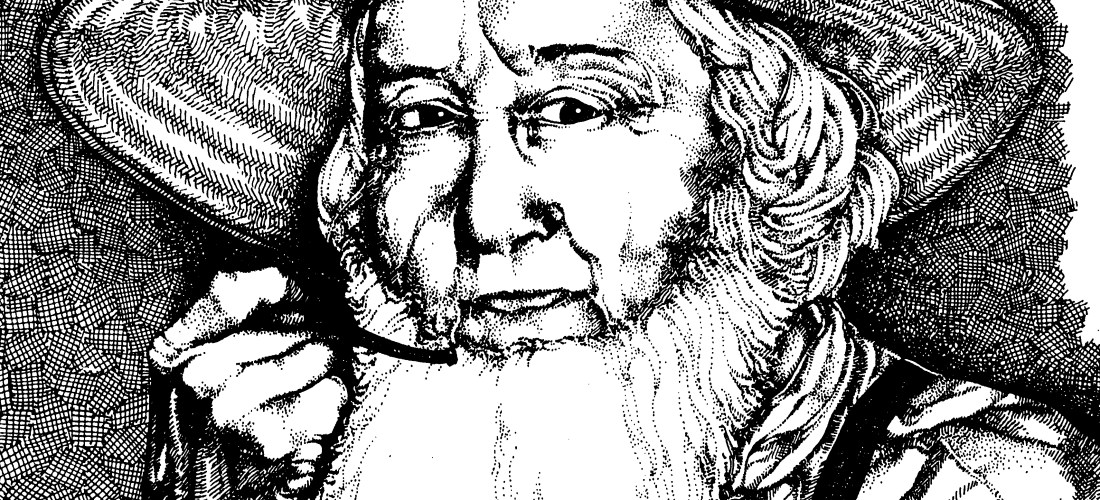
I did this pen and ink piece way, way back in high school. Yes, there are things I would do differently now, but I still like it!

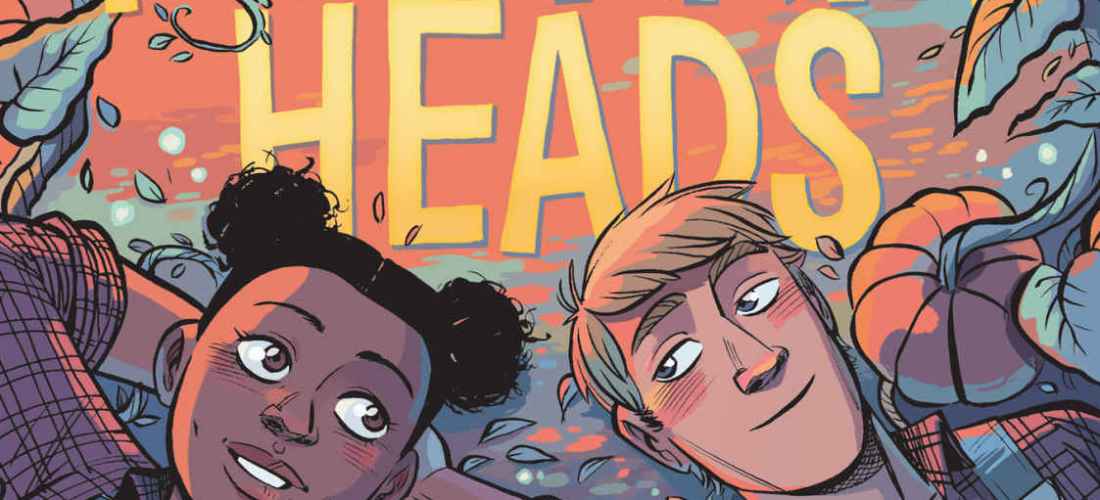
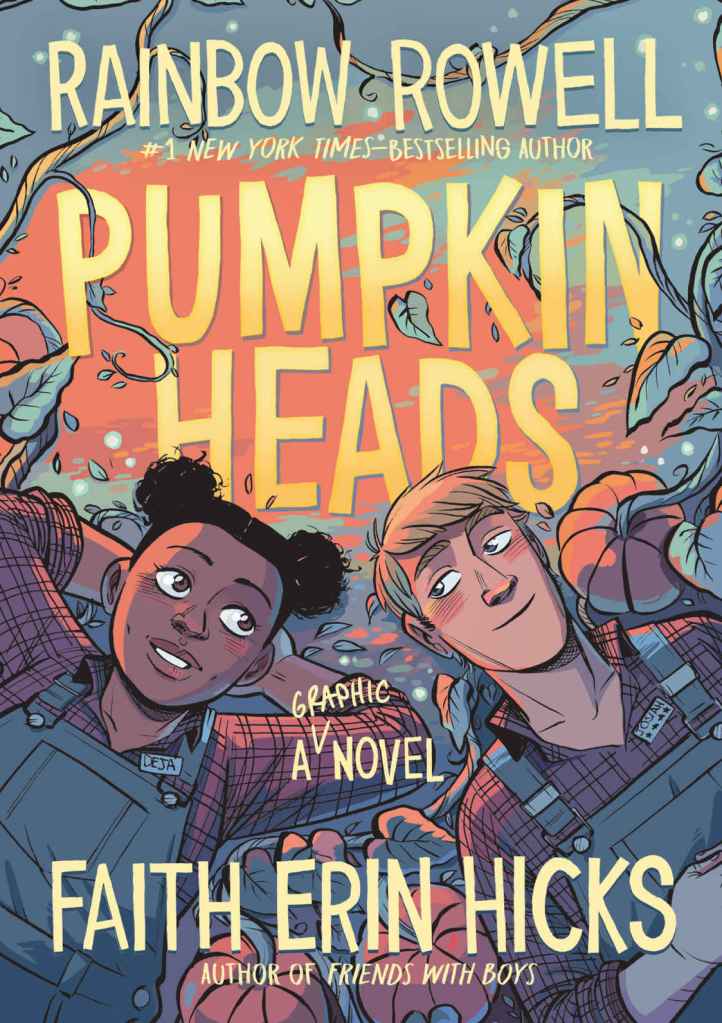
I live in Northeast Ohio, where we have four distinct seasons—fall, winter, spring, and traffic cones. I kid, sort of. Anyway, my point is, fall is my favorite season, and we have excellent pumpkin patches here, with apple picking, corn mazes, apple cider slushies, pony rides, and pumpkin everything, much like the setting of Pumpkin Heads the graphic novel by Rainbow Rowell and Faith Erin Hicks.
This is an intensely sweet and nostalgic story that made me immediately yearn for fall to get here. It’s set over the course of just one night at DeKnock’s World Famous Pumpkin Patch & Autumn Jamboree, the last night that best work buddies Deja and Josiah will work together before going off to college on their separate ways. There’s no big story arc here. Pumpkin Heads is a collection of small moments, of chasing crushes and unrequited love, of friendships and saying goodbye, of troublemaking kids and runaway goats, of Frito Pie, succotash, and other tasty fall treats. In a few short hours Deja and Josiah learn a lot about each other and themselves.
I first discovered Faith Erin Hicks back when she was doing web comics, and was immediately drawn to her line work and storytelling style. Now she’s a rising star in the graphic novel world. Her work includes the Nameless City trilogy, Friends With Boys, The Adventures of Superhero Girl (one of my favorites) and the young adult novel, Comics Will Break Your Heart. Her work here is assured and expressive. She captures the setting with perfect detail, and her characters’s emotions are clear and beautifully drawn.
I’m sure Rainbow Rowell needs no introduction—her novels include bestsellers like Eleanor & Park, Carry On and Wayward Son. Somewhat shockingly, I haven’t yet read anything of hers, but after Pumpkin Heads that will change. I love her dialogue here. It carries a surprising amount of emotional heft in a minimum of words. Her storytelling is warm and natural, and the combination of her words and Hicks art is a match made in heaven, or maybe a heavenly pumpkin patch.
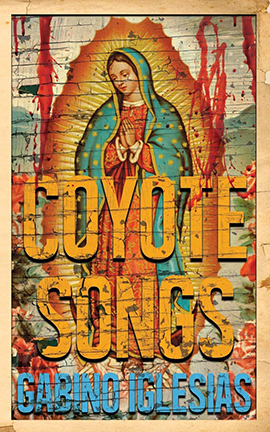
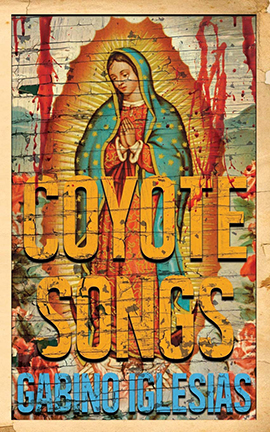
Coyote Songs, by Gabino Iglesias, is a short novel, but don’t let the brief length convince you that it lacks literary weight. I finished it late last night and it hasn’t yet left me. I had unsettled dreams, and I find myself thinking of it at odd moments.
A mosaic novel, Coyote Song follows the lives of several characters, some living and some not so much, who live on either side of the America/Mexico border, La Frontera. The book is set on the bleeding edge of right now, with border patrols, shocking violence, political upheaval, human trafficking, child stealing and murder. There are monsters here, both supernatural and human, both corporal and not. And though the supernatural terrors are detailed and bloodcurdling (the chapters about the mother twisted me into knots), it’s the human monsters I will never forget. Iglesias is unsparing in his descriptions of immigrants left in the backs of trailers to cook, of men for whom disposing of bodies is just a job to do.
Iglesias’ writing style is captivating, his use of language evocative. Read Coyote Songs. You’ll be richly rewarded, but be prepared to peer into the darkness that humans are capable of. Try not to look away.
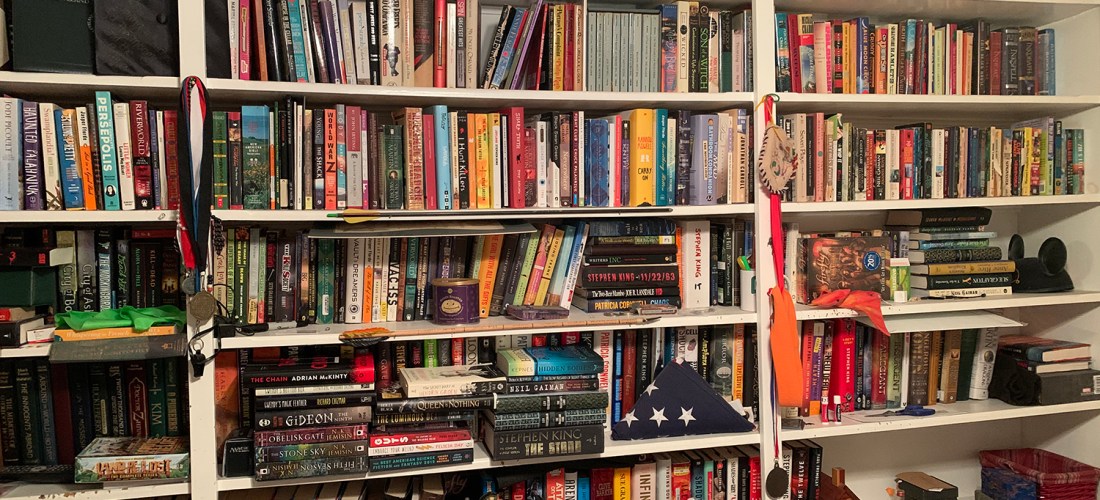
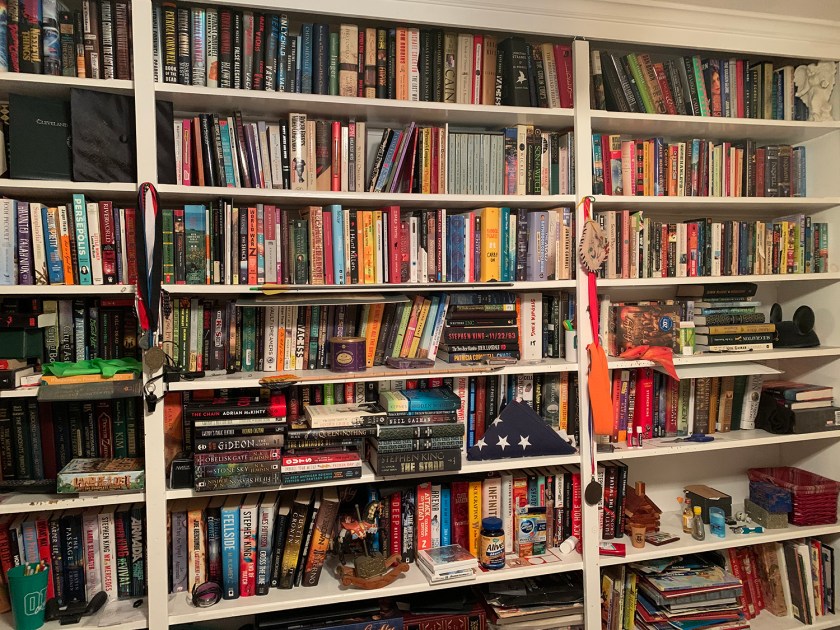
This post may be a little different than usual, because I’m going to talk about authors, rather than individual books. Well, actually, I’m sure book titles will come up quite a bit. Anyway, here we go, in roughly chronological order. This is all off the top of my head, and I’m sure I’ll miss some favorites, but it is what it is.
I wasn’t much of a reader in my early years. I guess I just hadn’t found anything that tripped my trigger. Then my first week of junior high I ventured into the library for the first time and started poking around. There they were, right next to each other on the top shelf of the section labeled SCIENCE FICTION—Asimov and Bradbury. I checkout out I, Robot and Martian Chronicles, read them each in a day.
That was that.
I read all the Asimovs and all the Bradburys, then I branched out. Heinlein juveniles, Arthur C. Clarke, Verne and Wells, and about 100 Andre Norton novels. Apparently junior high librarians truly loved Ms. Norton. Reading four or five books a week, it didn’t take me long to burn through that bookshelf. Happily, I discovered that my local city library had a large, well-curated science fiction section. I hit the motherlode.
Being a little obsessive, I started at the top left and worked my way alphabetically through it all. I discovered all the golden age giants in the field, and a lot of then-contemporary authors as well. I began to figure out what I liked and what I didn’t. Two goldmines: Damon Knight’s Orbit anthologies and Terry Carr’s Universe anthologies. Through those I would find authors that I still read and enjoy today:
• R.A. Lafferty, the gentleman from Oklahoma who did not start writing until relatively late in life, but was, for a while at least, the best short story writer in the English language. No one, before or since, wrote like Lafferty.
• James Tiptree, Jr. wrote intense, lyrical, and altogether original short stories that pushed science fiction in new and intriguing directions. When it turned out that “he” was actually a clinical psychologist and grandmother named Alice Sheldon, my teenage self thought that was exceedingly cool.
• Harlan Ellison. Much has been said about Harlan (usually by his own self), but the fact is he wrote some of the most seminal short stories in science fiction, and edited my favorite anthology of all time, Dangerous Visions. Again, Dangerous Visions, the even-bigger sequel, is just as good.
• Robert Silverberg, Theodore Sturgeon, Barry N. Malzberg, Felix Gotschalk, Gene Wolfe, Norman Spinrad, Philip José Farmer, Poul Anderson, Clifford Simak, Frederick Pohl, John Brunner, Thomas M. Disch, this fella named George R.R. Martin who wrote really good short stories long before he started writing about dragons. The list goes on and on, this is just scratching the surface. A special shoutout to Alfred Bester, who wrote The Stars My Destination, still maybe the finest science fiction novel ever written.
Ursula K. Le Guin challenged me and thrilled me in equal measure with each new book. Her short story, The Ones Who Walk Away From Omelas, is a masterclass all by itself, one of the world’s most perfect short stories.
As I got into high school, it wasn’t all science fiction, although clearly a lot of it was. My library had a spinner rack of beat-up paperbacks, where I found a novel called Carrie. In the 45 or so years since then, I’ve read nearly everything Stephen King’s written. His On Writing is my favorite writing how-to. In 1974, the same year Carrie was published, a writer named Robert F. Jones wrote a novel called Blood Sport. Jones only wrote a couple of other books, and I said I wasn’t singling out individual novels, but Blood Sport is special. It’s the violent, fever-dream story of a father/son canoe trip down a mythological river, filled with jarring magic realist imagery and audacious language. And because Jones wrote non-fiction for outdoor magazines, all the fishing and hunting details are spot on. I’m not much for re-reading, too many other books to read out there, but I’ve read Blood Sport at least a dozen times. It’s my favorite novel. When my son was 15 we took a canoe trip on the French River delta, and this is the novel I gave him to read on the journey.
Tom Robbins taught me that the through line from the beginning to the end of a novel does not have to be a straight line, and in fact the byways, asides, parenthetical comments, and wild-ass detours are what make his books so much fun. The death of Bonanza Jellybean in Even Cowgirls Get the Blues was the first time a book made me cry. Hopefully that’s not a spoiler since it was published decades ago.
Reading Slaughterhouse Five was a revelation—how could seemingly simple language say so much, and move me so deeply? I read everything Vonnegut wrote, continuing to marvel that such a humane, beautiful writer existed in the world. So it goes. Poo-tee-weet.
Philip Pullman, for a simple enough reason—His Dark Materials is my favorite fantasy trilogy of all time, end of story. Sorry, Lord of the Rings. Also, I’ve wanted my own daemon ever since reading it.
Late high school/early college found me discovering more authors who would stay with me. A friend handed me his well-worn paperback copy of The World According to Garp, and I dove headfirst into the work of John Irving. A completely different writer from Vonnegut, yet just as humane. And as a high school wrestler, his focus on that sport from time to time made me happy. I love it when authors get the details right.
Harry Crews introduced me to a gritty, harrowing version of southern gothic. Brutally beguiling.
I certainly didn’t give up on horror. Along with King, I discovered Clive Barker and Peter Straub, two writers who weave together rich, complex meditations on the nature of evil. Add Robert McCammon to this list. He writes horror as well as anyone, plus, with Boy’s Life, one of the great coming-of-age novels in American literature. This is not an exaggeration. If Mark Twain wrote about small town Alabama in the 1960s, and sprinkled it with magic realism, it might have resulted in Boy’s Life.
So what am I reading today? Glad you asked! Many of the authors listed above are still a regular part of my TBR list, but I’ve added a bunch more to my collection of must-reads:
• I didn’t come to Neil Gaiman through his comics like many people. For me it was American Gods, after which I immediately read everything he had written up to that time. He understands that intersection between myth, magic, and fairytales better than just about anyone. Depending on the day, I tell people he’s my favorite writer.
• Speaking of that intersection between myth, etc., Margo Lanagan inhabits that same space. Her work is beyond original. I first discovered her with her story Singing My Sister Down, which will gently, sweetly shatter you.
• On the days when Neil Gaiman isn’t my favorite author, Joe Lansdale usually is. He writes horror, westerns, crime, and historical fiction with equal skill. His Hap and Leonard novels are the most consistently entertaining works of fiction being written today. Best dialogue writer this side of Elmore Leonard.
• Andrew Vachss writes crime fiction that’s so beyond hard boiled, it makes Raymond Chandler read like Goodnight Moon. Writing is only a sideline for him…he uses the profits from his books to finance the pro bono legal work he does exclusively for abused kids.
• John Scalzi reminds me of Robert Heinlein, but without the troubling politics and misogyny. Rip-roaring space opera, believable humans and aliens, wonderful world-building.
• Alison Bechdel’s graphic novels are of such a high degree of difficulty that it boggles the mind. Personal yet universal, which is hard to pull off.
• I first discovered Chuck Wendig through his blog, where he dispenses writing advice and expounds on the world with profane delight. His fiction is a nice mix of horror, fantasy and apocalyptic science fiction. Do yourself a favor and follow him on Twitter, as well.
• Seanan McGuire, who also writes as Mira Grant, is a true original, and alarmingly prolific. She writes fantasy, science fiction, and horror, all of it amazing. Her Wayward Children series is portal fantasy that I recommend to anyone who will listen.
• Lynda Barry is an award-winning cartoonist who has written several books, but truthfully, she’s here for just one—the graphic novel Cruddy. Heartbreaking, hilarious, and often downright scarifying. Should be required reading in every high school in the country.
• Joe Abercrombie is LordGrimdark on Twitter, and the name is apt. He writes dark, gnarly fantasy, blood-drenched and dense. I space his novels out, because they require concentration that is richly rewarded.
• Richard Kadrey’s singular creation is Sandman Slim, a half man, half demon whose adventures on earth, in hell, and all points in between span a bunch of novels, and I hope they never stop.
• Simple enough—Paul Tremblay is the best new horror writer working today. Starting with Head Full of Ghosts, he’s redefined the genre. His new one is coming soon, and I can’t wait.
I guess that’s it for now. There are many other authors I love, but they don’t yet have the body of work to make this list. Or I just forgot them. I know this went a bit long, but I’ve really enjoyed this read down memory lane. Thanks for joining me.
I can’t play an instrument, can’t sing a lick, but oddly enough I love to write song lyrics. I’ve had a few recorded by local bands and singers, but if any singer/songwriters out there are interested, I have a notebook full ready to go. I’ve always really liked this one.
GAVE ALL THAT UP
I had this little walk-up flat down in Chinatown
above the sidewalk vendors selling magic by the pound
neon pulsed outside the window like crickets in the night
and the bar girls walked home all alone through the early morning light
from my fire escape I’d watch the parade, check the pulse of the city around me
open myself to the beat and the roar, let the sounds of the city surround me
but Chinese food gives you a headache
and smoggy air gives you the flu
so I gave all that up for you…
and now we’re through
I had the kind of lifelong friends that people sing about
however deeply in I went, I knew they would pull me out
call us Musketeers or Stooges, we never really cared
the three of us would ride a passing comet on a dare
side by side we fought and cried and propped each other up
I considered knowing them the source of all my luck
but Pauly makes you nervous
and Ronnie drinks more than a few
so I gave all that up for you…
and now we’re through
I had a life that fit me like a well-worn overcoat
and then you came along and rocked my happy little boat
I took your hand and turned my back on all the things I knew
I gave all that up for you…
and now we’re through
I can’t remember now if you even asked me to
but I gave all that up for you…
and now we’re through
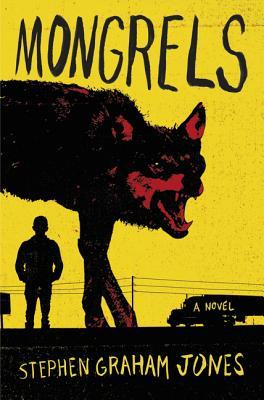
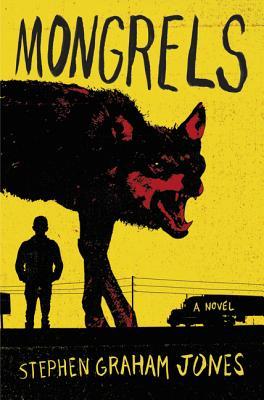
This is a werewolf novel unlike any you’ve read, possibly unlike any every written. There are no foggy London alleys, no windswept moors, no crumbling castles drenched in moonlight. Mongrels is a white trash coming-of-age novel that swings back and forth across the American south from Texas to Florida.
Mongrels also swings back in forth in time, telling its story non sequentially in vignettes that, taken together, present a mosaic of life as a family of werewolves. The narrator is a boy traveling with his aunt and uncle, both werewolves, as they cut a bloody swath through the south, stopping here and there to work odd jobs and live for awhile before the bodies pile up and they have to move on. We meet the boy at various ages, both young and teenaged. This is a coming-of-age story with a unique twist—at he grows up he’s consumed with wondering when, and if, he will turn for the first time.
Jones gives us werewolf history and folklore that is wholly original and fascinating. He writes with a hypnotic rhythm, mixing graphic mayhem with surprising spurts of humor to offset the spurts of blood.
I can’t recommend Mongrels enough. It’s a tour de force.
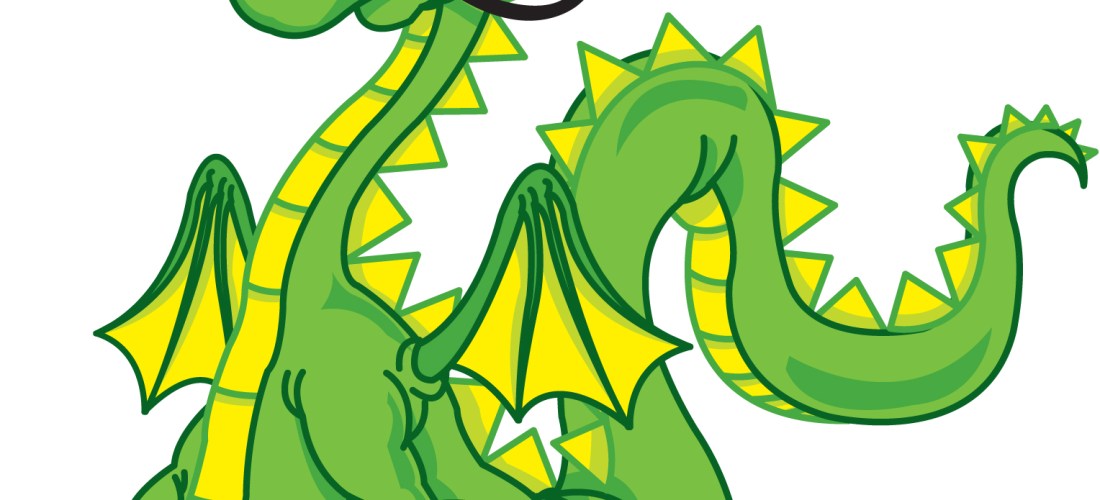
I designed this as a mascot for a sailboat called The French Connection.

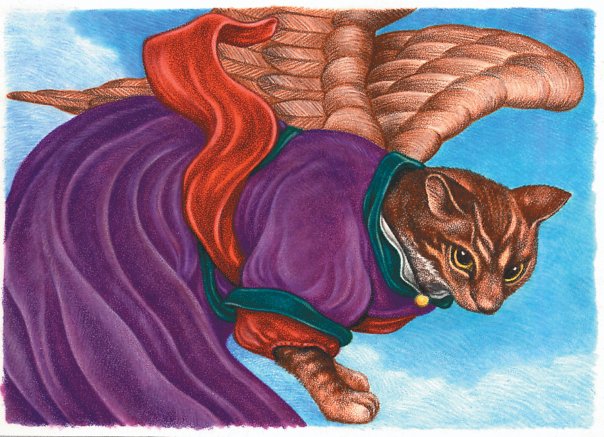
Am I embarrassed by the name of this piece? No, I am not. Colored pencil.
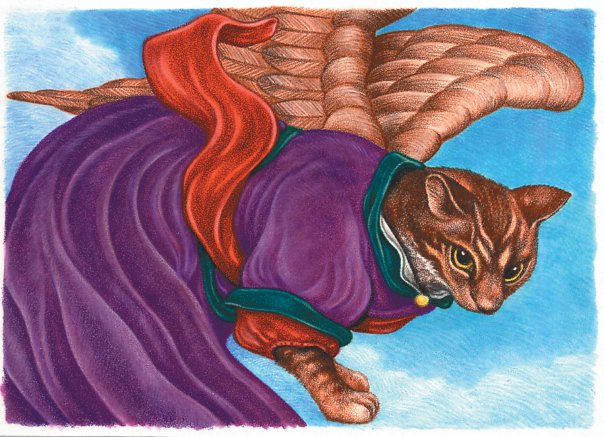
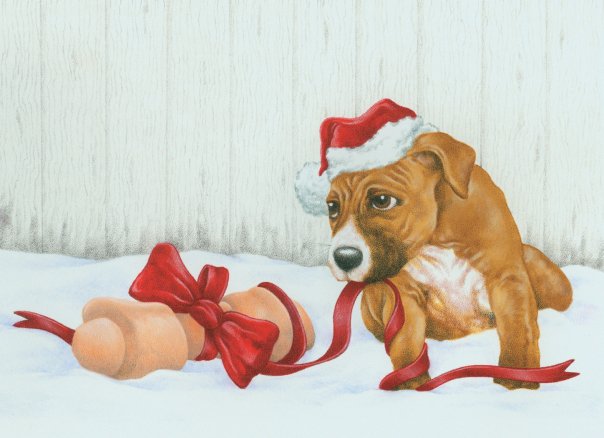
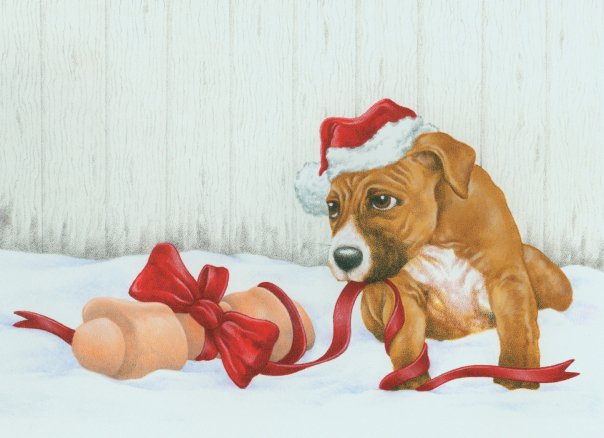
I did this as greeting card art. Christmas, of course!
Way back in 1999 I wrote a picture book manuscript that I really liked. It was a silly, rhyming (Yes, I know, rhyming picture books are perennially out of favor, but mostly because there’s so much bad rhyme out there, and my rhyming is pretty good, if I do say so myself. But I digress.), 313 word picture book called Up Ned’s Nose. Yep, it was about a kid named Ned with an alarming number of things stuffed up his nose, and his older brother’s attempts to extract said things. The book had no moral, no lessons to impart. It was goofy and funny, and like I said, I really liked it. As an illustrator, I knew it would be stupid fun to illustrate.
Earlier that year I had entered a story in the Writer’s Digest annual writing competition, and placed in the top 10, which was pretty cool. So, not really expecting much, I entered Up Ned’s Nose in the 2000 Writer’s Digest competition.
I won the grand prize!
Crazy. Not sure what you get now for winning now, but back then the prizes were pretty spectacular. I got a nice check, which was great, but the rest of the prize was, well, life changing. Writer’s Digest sent my wife and I to New York City all expenses paid, accompanied by one of their editors, who was altogether delightful. That’s still not the best part. Included in the trip was the chance to meet with three editors of my choice, in their big, fancy NYC publishing house offices. All three were welcoming, supportive of my work, inspiring, and full of helpful tips. On days when I’m down on myself and thinking of hanging up my keyboard, I still think back to that trip.
Did any of them make an offer on Up Ned’s Nose? Nope. But that was okay. In the several months between winning the prize and taking the trip, I decided to try subbing Ned. And the first publisher I sent it too, the very first, liked it and offered a contract. The publisher was Smallfellow Press, the kid’s division of Tallfellow Press, founded by Larry Sloan and Leonard Stern, of Price Stern Sloan fame (Sloan and Stern have sadly both passed away since then.). They paid me the first third of the agreed upon advance, as stated in the contract.
So did the book get published? Nope. A funny thing happened. One of the partners at Smallfellow became worried that a little kid would be unduly influenced by my silly story and stuff a toy truck up their nose, and they would be held liable. They went back and forth. Eventually my manuscript was sent to Alan Isaacson, the lawyer played by Ed Norton in The People vs. Larry Flynt, to get his opinion on the matter. At least my story was meeting famous people.
A couple of years passed. I never did hear what Mr. Isaacson thought about the issue, but Smallfellow eventually let the contract lapse.
In the intervening years I’ve submitted Ned a couple of times, and had some interest, but nothing has come through. Truthfully, after everything that’s happened, my heart hasn’t really been in it. This past summer a writing conference came to Cleveland, my home town, and I pitched Ned to an agent. She asked me to send her the manuscript. I haven’t heard back yet, but I’m going to give it a bit longer.
After all, what’s a few more months.
I can’t play an instrument, can’t sing a lick, but oddly enough I love to write song lyrics. I’ve had a few recorded by local bands and singers, but if any singer/songwriters out there are interested, I have a notebook full ready to go. Here’s an example:
MOTHER MUSIC
I first heard Mother Music as a child in the south
calling through the screen door from the woods behind my house
barefoot in the dew-wet grass, blanket wrapped around me
deeper still among the trees I felt her voice surround me
I came into a clearing hung with early morning mist
sat back and watched the treetops that the sun began to kiss
(chorus)
and Mother Music sang to me from deep within the earth
a song of new beginnings, of cleansing and rebirth
Mother Music sang to me from leaf and branch and stone
a song so bold I thought the skin would lift right off my bones
Mother Music sang to me in a voice of pure white light
left me dazed and satisfied, possessed of second sight
my intervening years are filled with restlessness and yearning
the need to hear her song again rests within me, burning
I’ve slept beneath the stars above more times than I can say
from mountain top to desert floor I’ve watched the break of day
I catch a whisper now and then, like an echo out of time
and it brings me back to dew-wet grass and Mother Music’s rhyme
(chorus)
when Mother Music sang to me from deep within the earth
a song of new beginnings, of cleansing and rebirth
Mother Music sang to me from leaf and branch and stone
a song so bold I thought the skin would lift right off my bones
Mother Music sang to me in a voice of pure white light
left me dazed and satisfied, possessed of second sight
(bridge)
Mother Music, sing to me
Heal my heart, set me free
Mother Music, sing to me
My eyes are open, let me see
I’ve traveled down so many roads to find this humble truth
that I was touched by magic one sweet morning in my youth
but you can’t recapture magic and you can’t bring back the past
so I’ll spend my time contented ’til I leave this place at last
(chorus)
then Mother Music will sing to me from deep within the earth
a song of new beginnings, of cleansing and rebirth
Mother Music will sing to me from leaf and branch and stone
a song so bold I think the skin will lift right off my bones
Mother Music will sing to me in a voice of pure white light
leave me dazed and satisfied, possessed of second sight
I can’t play an instrument, can’t sing a lick, but oddly enough I love to write song lyrics. I’ve had a few recorded by local bands and singers, but if any singer/songwriters out there are interested, I have a notebook full ready to go. Here’s an example:
IF THERE’S A JUKEBOX IN HELL, IT’S PLAYING OUR SONG
I was drunk our wedding night, couldn’t get it up
you did my best man in the bathroom, beat him like a pup
we headed south to honeymoon where tropic breezes blow
I can understand the hurricane, but why’d it have to snow?
there’s so many places where our love went wrong
if there’s a jukebox in hell, it’s playing our song
we lived above a laundromat just a stumble from the bar
even so, some nights I just couldn’t crawl that far
when I heard your ass was for the asking, I didn’t really care
let’s just say I wasn’t caught completely unaware
there’s so many places where our love went wrong
if there’s a jukebox in hell, it’s playing our song
I walked in one afternoon and caught you dead to rights
you said, honey wait your turn…it wasn’t worth a fight
you picked up the bottle, I picked up young girls
we’d meet at night and hold on tight to our sad and lonely world
there’s so many places where our love went wrong
if there’s a jukebox in hell, it’s playing our song
we’ve lost our friends down bad dead ends, lost our self respect
lost whatever we once had to pity and neglect
consider this an invitation to put our lives to bed
it really couldn’t be much worse with a bullet in the head
I’m leaving in the morning… I hope you’ll come along
this bus is heading straight to hell, and I hear they’re playing our song
there’s so many places where our love went wrong
if there’s a jukebox in hell, I hope it’s playing our song
there’s so many places where our love went wrong
if there’s a jukebox in hell, I hope it’s playing our song
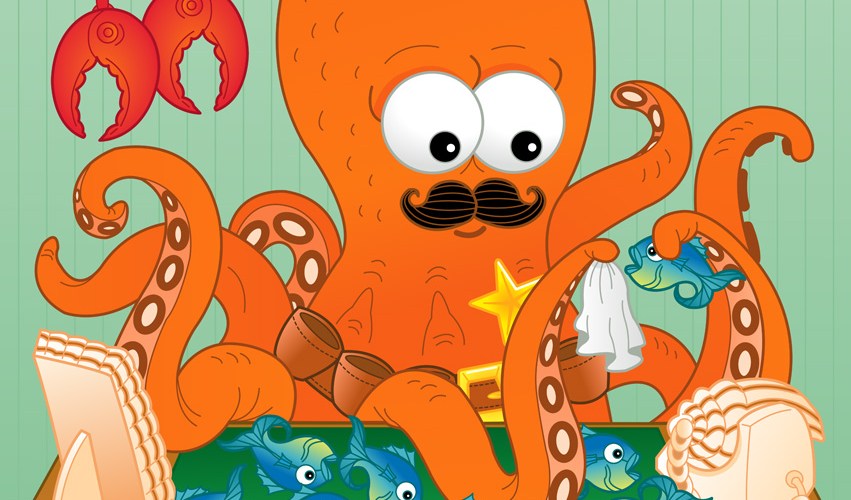
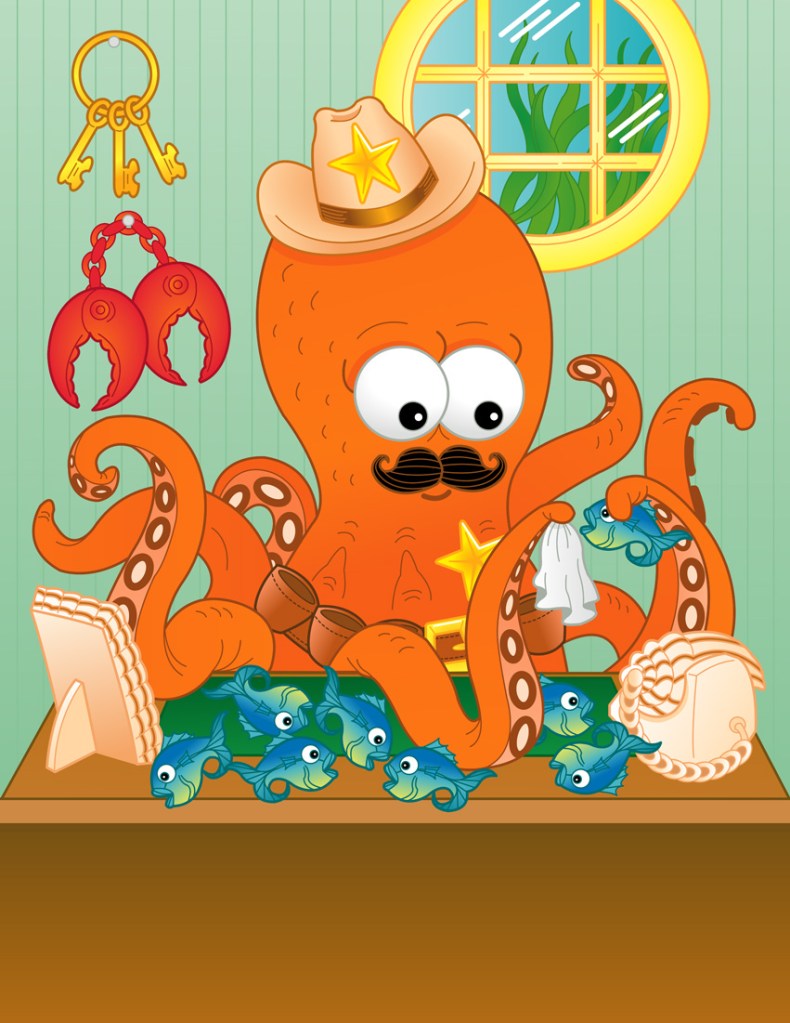
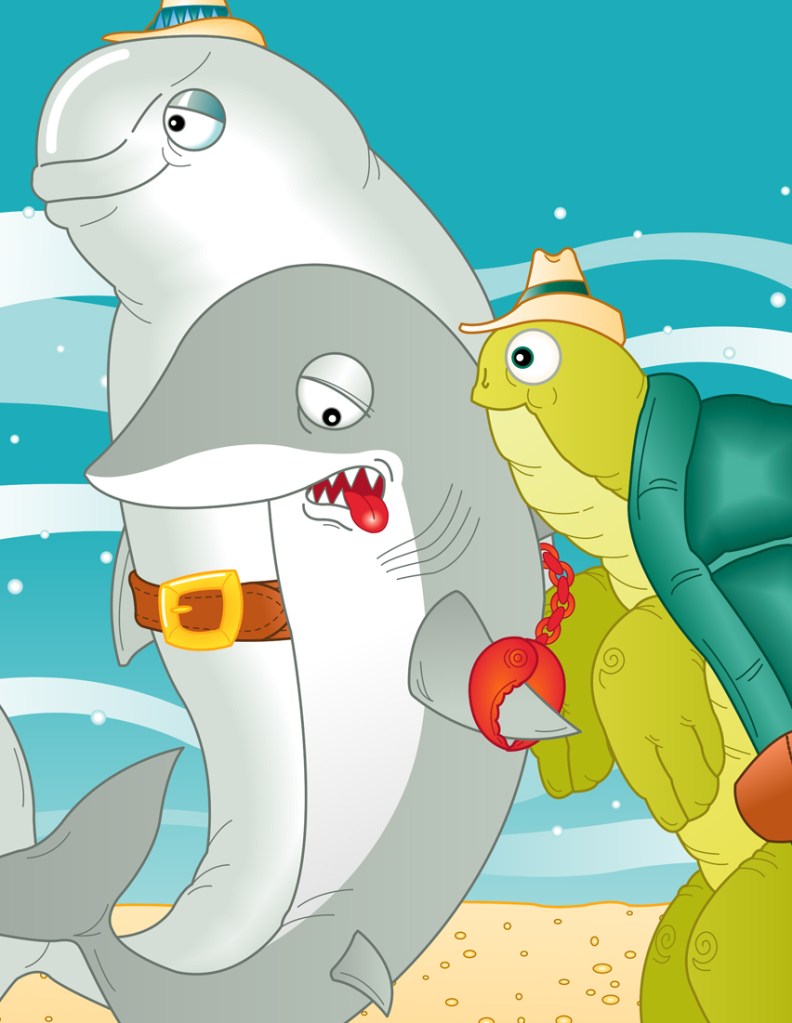
Here are a few illustrations from a picture book I was hired to illustrate several years ago. this was done completely digital.

 Dave Writes and Draws