I belong, as a contributing member, to a talented group of writers who are responsible for A Muse Bouche Review, a literary newsletter. It gives me a chance to write something new each month around a given theme, which I’m enjoying. The theme for September, 2023 is Obsession and my contribution this month is a song lyric titled I’d Rather Go Crazy (Than Never Go Anywhere At All). Here’s a taste:
When I first met Tracy, she was walking along the ledge outside my window, her toes over the edge. She tapped on the glass, then threw me a smile that was a little bit crooked, and a little bit wild. She stepped through the window, like she did it all the time, She said “Hey, how are ya? Thanks, I’m fine,” “or so I’ve been told,” then she started to laugh, and that’s what I remember when I’m remembering our past.
She said, “I used to walk the tightrope and swing on the trapeze. Well, not really, but don’t you think that’s a cool thing to be? Did you ever tap dance ten floors up and know you just can’t fall? You know, I’d rather go crazy, than never go anywhere at all.”
S.A. Cosby writes dark, gritty, rural crime fiction that is as unflinching and uncompromising as anything by Joe R. Lansdale or Andrew Vachss, as brutal and surprising as a sucker punch to the solar plexus. His novels are set for the most part in the part of southern Virginia that’s a universe away from the Washington D.C. corridors of power.
I read Blacktop Wasteland and Razorblade Tears, his previous two novels, back to back. Not something I normally do. So many books, so little time, and all that. The truth is, I couldn’t help myself. Here was an author in full control, writing crime fiction so exhiliarating, so harrowing, that I enthusiastically doubled up. His settings are authentic and captivating, his characters deeply flawed and fascinating, his plots propulsive.
The good news is, All the Sinners Bleed is more of the same, and just as good.
I’m only going to hit the highlights, as I’m not a big believer in book review spoilers. Titus Crown, the first and only black sheriff in deeply rural Charon County Virginia, finds himself embroiled in a case with more tentacles than Cthulhu, and those tentacles wrap themselves around the county and its denizens, squeezing tight. There’s a school shooting of a beloved teacher, multiple shocking discoveries, and numbing violence. The bodies pile up, threatening to bring Charon County down around Sheriff Crown’s broad shoulders.
Crown is a towering creation, a man at once brave and tenacious, yet haunted by his past and often overcome with self-doubt. Cosby’s other characters, including Crown’s father and brother, his current and former girlfriend, and the folks that work for him in the sheriff’s department, are complex and fully realized. They feel lived-in, if that makes sense, as if Cosby plucked them from the real world rather than creating them out of whole cloth.
Cosby is unsparing in his depiction of small town politics, deeply engrained Southern racism and bigotry, religion both comforting and caustic, and the inner workings of a small local police force under extraordinary stress. How each of these societal parts that make up Charon County are impacted by, and respond to, the all-consuming violence that descends upon them is what makes this novel so breathtaking. All The Sinners Bleed will sink its claws into you and refuse to let go.
Pick up All The Sinners Bleed today, and plan on reading right on through the night.
With some authors, when you read their earliest work, and you can see the rough edges. There are flashes of brilliance, the promise of what’s to come with the benefit of experience. Then there are the writers who arrive fully formed, already operating at full power. As a teenage science fiction and fantasy fan in the ’70s, that happened for me with a couple of authors—James Tiptree, Jr. (Alice Sheldon) immediately comes to mind.
Then there’s Tom Reamy. An enthusiastic participant in fandom, his short stories were an immediate revelation when they arrived in the pages of The Magazine of Fantasy and Science Fiction and various anthologies. He was nominated for and won awards, and he seemed poised for a long, exciting career. Then he passed away from a heart attack at the age of only 42, a new story in his typewriter. His posthumously published novel Blind Voices, a dark, Bradburyesque fantasy, proved that he was just as talented doing longer work.
Under the Hollywood Sign is a complete collection or Reamy’s work, and it’s required reading for any fan of science fiction, horror, and fantasy, particularly the dark variety. The stories I still remember from my teen years, the ones that have stuck with me for decades, are all here—Twilla, Beyond the Cleft, The Detweiler Boy—and they are just as bold and brilliant as I remember. Another standout, the Nebula-winning San Diego Lightfoot Sue, is quite simply one of favorite short stories of all time.
Reamy was not afraid to delve into shadowy places, and some of these stories are dark indeed, but there is also humor and joy. Many of the stories are open ended, with an ambiguity that I love. He refused to lead the reader by the nose from beginning to end, but instead trusted them to follow the clues he scattered through the pages.
One other thing that makes this a must read: Included here is a never-before-published, 17,000 word story, Potiphee, Petey and Me, that was originally sold to Harlan Ellison for his fabled Last Dangerous Visions. It’s a fun, freaky, playful, downright gonzo piece of work that’s packed with enough ideas for an entire novel. It would have fit perfectly into the Dangerous Visions world. One can only imagine where Reamy would have gone had he survived.
It’s wonderful having all of Reamy’s work in one place, and I can only hope, as a lifelong fan, that Under the Hollywood Sign introduces a new generation to his work.
I belong, as a contributing member, to a talented group of writers who are responsible for A Muse Bouche Review, a literary newsletter. It gives me a chance to write something new each month around a given theme, which I’m enjoying. The theme for August, 2023 is Rivalry and my contribution this month is a short story titled Nemesis and Narcissus. Here’s how it starts:
My plan is set, my players in place. I need only set the wheels in motion to take that insufferable bore Narcissus down a peg. If all goes well, it will be glorious.
Stealthy as a cat, I slink between the olive trees that crown a bluff overlooking the sparkling blue waters of the Aegean. I spy him right away in his favorite spot, lounging languidly on the shore, gazing rapturously at his own reflection. Narcissus is nothing if not predictable. I raise and twirl one finger, signaling my collaborators to be ready, and stride down the hill.
Not surprising given who he is, Narcissus doesn’t notice me until I tap him on the shoulder. He tears himself away from his reflection just long enough to glance in my direction, and sniffs contemptuously. “Ah, Nemesis. I thought I smelled the stink of jealousy and desperation, and here you are.” As usual, he attempts wit, and only makes it halfway there.
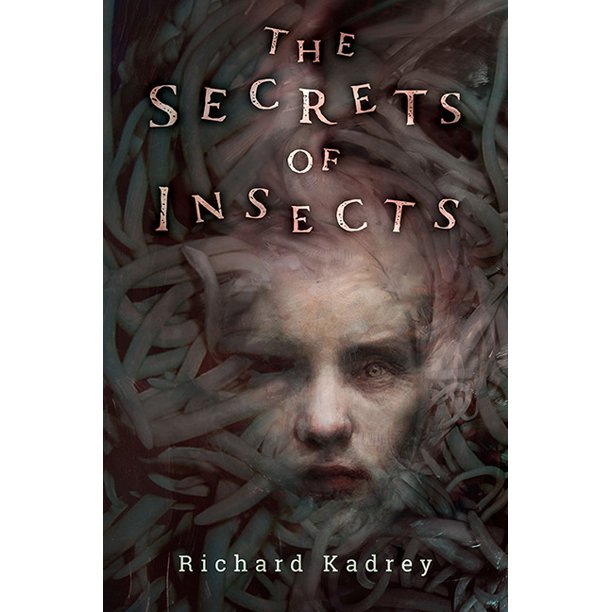
Here’s a thing I love as a reader…when an author I know primarily through their novels wows me with a short story collection. Richard Kadrey’s Sandman Slim is one of my favorite series of all time, and his other novels—The Everything Box and The Grand Dark to name just two—are equally wonderful.
The Secrets of Insects is a collection of short stores that spans 20 years of Kadrey’s career, and proves, not that I had any doubt, that he’s just as comfortable at shorter lengths. Not surprisingly given his novels, Kadrey is mining a dark vein here. Killers, both supernatural and not, prowl these pages, along with ancient, murderous gods, a demonic carnival, a post-apocalyptic Los Angeles, real life cannibal Ed Gein, and all manner of mayhem.
Kadrey never, ever holds back. There is horror here, dark fantasy, and suspense, and Kadrey has a real knack for grabbing you by the back of the neck and dragging you into places you may not be ready to go. His characters, whether human or not, whether good or evil (and let’s face it, most are some gradation of evil), feel like they actually exist, that Kadrey found them and dropped them kicking and screaming into the pages. They have a gritty, lived-in feel. Likewise, his settings are original and surprising, even if they are awash in blood.
For fans of Sandman Slim—and really, everyone should be—there are a couple of stories set in the Sandman Slim universe. One of them, Candy Among the Jades, appears here for the first time. It’s worth the price of admission all by itself. It features Candy and a whole bunch of Jades, and what else do you need to know?
The publication date for The Secrets of Insects is right around the corner, on July 31st. Pre-order today, so it’s waiting for you in your mailbox or on your Kindle!
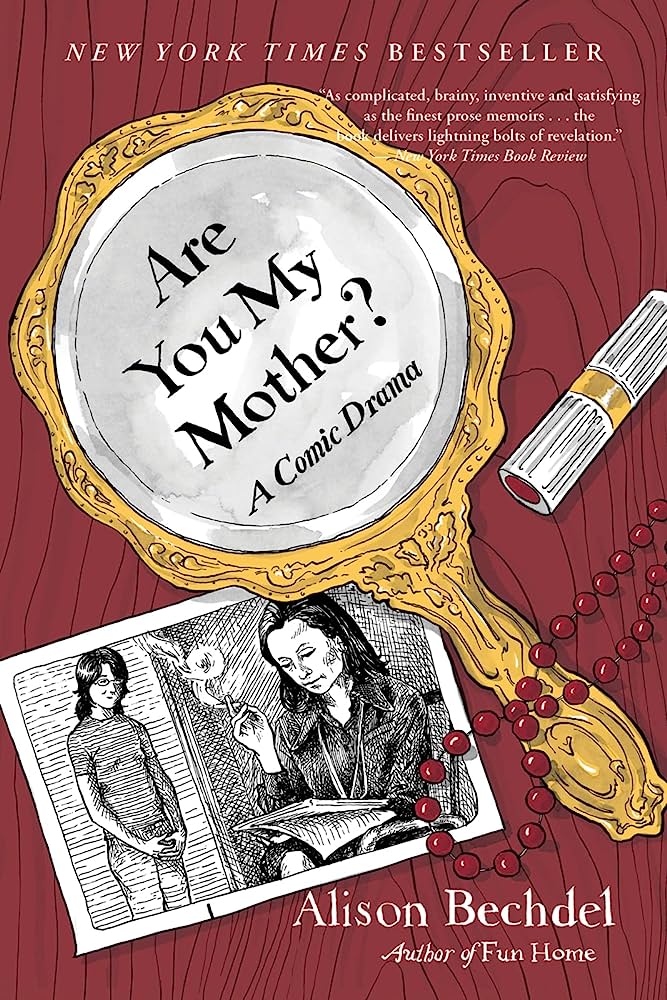
I’ve been a fan of Alison Bechdel’s comic work for years, but Fun Home was a game-changer. I first saw the musical version on stage, and was blown away, then immediately bought the book and was blown away all over again. The darkly (accent on darkly) comic story of her relationship with her father, Fun Home combines Bechdel’s words with her dense, richly detailed artwork to tell a story that’s heartbreaking and funny in equal measure.
Are You My Mother? takes on Bechdel’s relationship with her mother, and it’s just as densely layered, just as powerful, just as heartbreaking and funny as Fun Home. It’s subtitled A Comic Drama, and that’s an apt description, but it’s so much more than that. Bechdel has honed her storytelling style to a razor’s edge—she travels back and forth in time, circles around themes, doubles back to add detail and texture, without ever once losing the thread of the story. With words and art in perfect synchronicity, it’s a high wire act few graphic novelists could pull off.
Bechdel’s mother is a complicated, contradictory woman, and in the wrong hands she could become a caricature. Instead, Bechdel creates a deeply personal portrait of her mother, and of her relationship with her. Along the way she shares shockingly honest, intimate details about herself, her experiences with therapists, and various lovers, along with entertaining, thoughtful side trips concerning, among others, psychoanalyst Donald Winnicott.
Through it all, Bechdel’s intelligence, curiosity, and (yep, I’m saying it) creative genius shines through. Are You My Mother? is a deeply felt, beautifully executed masterpiece.
I belong, as a contributing member, to a talented group of writers who are responsible for A Muse Bouche Review, a literary newsletter. It gives me a chance to write something new each month around a given theme, which I’m enjoying. The theme for July, 2023 is Making History and my contribution this month is a short story titled 11 Days, 25 Minutes. Here’s how it starts:
Hey, everyone! Thanks for joining me as I attempt to make history. So, here’s the deal. Back in 1963, a seventeen-year-old kid in San Diego stayed awake for 11 days, 25 minutes. That’s just over 264 hours if you do the math. He did it under controlled conditions, for a science fair. That world record has stood unchallenged for 60 years. You know what I have to say about that?
Fuck him. I’m going to crush that record. I’m shooting for 13 days, and all of you fine people get to watch every second of it.
It’s going to work like this. I’m talking to you on a laptop, and behind me is the back half of my bedroom, with my TV and gaming setup. To my right, your left, is a bathroom. You won’t be able to see inside, ‘cause that would be gross, but I’ll keep the door open so you can hear that I’m awake. Otherwise I’ll be visible at all times—gaming, watching TV, reading, posting on my socials, and of course chatting with all of you. This stream will keep running 24 hours a day.
This dorm fridge here next to me is stocked with water and Monster. Gotta stay hydrated, and I gotta stay awake. I’ve got bags full of snack essentials—Combos, Cool Ranch Doritos, Snickers, Flamin’ Hot Cheetos, Double Stuff Oreos, and Peanut M&Ms—plus, my mom has agreed to make me three meals a day. She’s not the greatest cook in the world, so with any luck she’ll Door Dash me some Chipotle a couple of times.
Otherwise it’s you and me for the next 13 days. Let’s synchronize watches, or smartphones. It’s exactly 9:30am Eastern Daylight Time on July 6th, 2023. I got a solid ten hours of sleep last night, and I’m ready to go. Let’s get this party started!
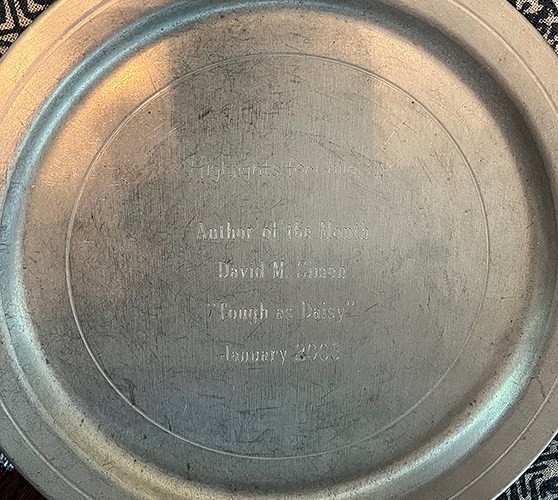
Back in 2005 I reached one of the pinnacles of my writing career up to that time—I had a story, “Tough as Daisy,” published in everyone’s favorite dentist office magazine, Highlights for Children. It got even better a little while later, when a surprise package was delivered, an author of the month award from the magazine. Each month, the editors of Highlights choose a favorite story, and I was lucky enough to receive it.
It’s a little hard to make out, but it reads: Highlights for Children Author of the Month David M. Simon “Tough as Daisy” January 2005
It’s a little beat up, a little worn, but after nearly 20 years I’m still ridiculously proud to have been chosen.
I’m not an overly fast reader, but I’m steady. I haven’t really stopped reading since I discovered science fiction in 7th grade, and I turned 63 a couple of days ago, which means I’ve read a lot of books. I have decent recall, but the way my brain works for some reason is that the stories that really stick with me, the ones that live forever rent-free in my head, are the gut-punchers, the stories that have a physical, visceral impact.
The other thing my brain does, and maybe everyone’s brain works like this, I don’t know, is that sometimes when I’m reading something, it triggers a memory of one of those gut-puncher stories. So, if you’ll indulge me for a minute (and if not, feel free to skip ahead), these are the stories that Tender Is the Flesh, Agustina Bazterrica’s brutal, brilliant, bleak, and unforgettable novel ripped from my memory as I read it: The Harvest, a notorious comic written and drawn by Jose Ortiz for 1984 Magazine; In the Barn, a shocking Piers Anthony story that appeared in Again, Dangerous Visions; Exquisite Corpse, Poppy Z. Brite’s tale of dueling cannibalistic serial killers in New Orleans; and, finally, Cormac McCarthy’s post-apocalyptic The Road.
If you’ve read any of these, you should have an idea of what’s in store for you with Tender Is the Flesh, but please believe me when I tell you—you are not prepared. In fact, consider this a wholesale trigger warning for what follows.
Tender Is the Flesh is set in a future world where an infectious virus has rendered all animal meat, literally all of it, deadly poisonous to humans. In short order, with surprising, disturbing quickness, institutional cannibalism becomes the law of the land, a thriving commercial industry that raises, processes, and slaughters for food.
The main character, Marcos, is a broken man. His wife has left him after the death of their child, his father is caught in the grip of dementia, and he’s having doubts about his job—he’s the number two man at a processing plant for “Special Meat,” the accepted euphemism for human flesh. Still, he’s good at his job, going through each day with numb efficiency. Then something happens that turns his life upside down and forces him to make a difficult choice.
When it comes to world building, Bazterrica outdoes herself. Much of the novel is a tour through the entirety of the “special meat” industry, from top to bottom, and she presents it with stomach-churning, unflinching detail. This is a novel that’s clearly meant to be hard to read, and it succeeds on that count. I think that’s part of what makes it so important, so relevant. Because maybe, with this out there in the world, with these words committed to paper, there’s less of a chance that something like it would actually come to pass, although I have to admit my faith in humanity right now is at an all time low, so who knows?
There were several times while reading Tender Is the Flesh that I had to pause and set the book down for a moment. If you’re an animal lover, in particular, be aware there’s a scene here you may want to skip. The whole book is traumatizing, but that scene…
Tender Is the Flesh is a horror classic, if you have the stomach for it. This is brave, uncompromising writing. I have a feeling that the next time I read something that punches me in the gut, this is the novel my brain will remind me of.
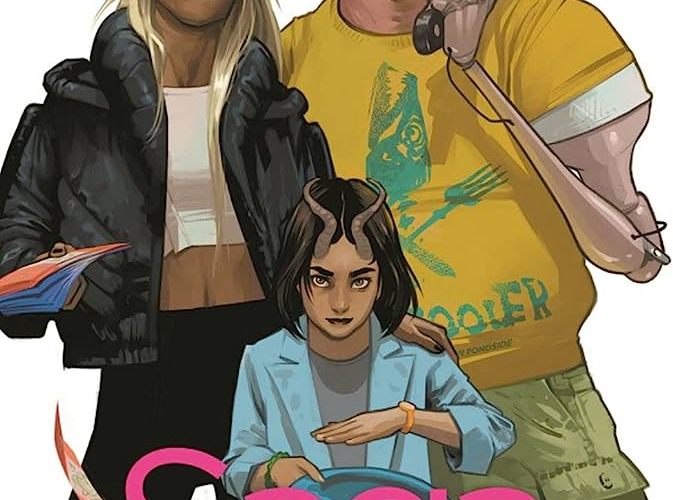
Let’s get this out of the way—for me, Saga, taken as a whole, is the greatest graphic novel in comic history. Yes, that’s a bold statement. No, I don’t read nearly enough graphic novels to justify making such a bold statement. Yes, I know Saga comes out as individual comic books, but I’ve always read it in the collected volumes, so for me, and I suspect many readers, each volume is a graphic novel.
Nevertheless, I stand by what I said. This is science fiction/fantasy as expansive and creative as any being written, or drawn, today.
Brian K. Vaughan’s storytelling bravado, his expansive world building, his reckless willingness to say fuck it, let’s see what happens if we take the story here, and most of all his beautifully complex, deeply layered characters—all of it adds up to a piece of work unlike anything else I’ve ever read.
Fiona Staples artwork complements Vaughan’s words in miraculous ways. She’s able to express insanely complicated ideas in a detailed, painterly way without ever sacrificing the heart of the story. Every page is a marvel of design and execution working in perfect harmony.
Volume 10 encompasses chapters 55 through 60. Staples and Vaughn took a long-deserved three-year break after the shattering loss that capped chapter 54. I imagine they needed to recharge their batteries, and in truth, my own emotional battery was pretty depleted by what they did to me. That’s the thing. They’re not afraid to make you deeply invested in a character and then dispatch them with ruthless efficiency.
Volume 10 finds Alana, Hazel, and Robot three years on, still reeling from the loss, still processing the trauma. But they are nothing if not survivors, and they are involved in new, sometimes harrowing adventures, with a new cast of characters, plus there are old, formidable enemies that haven’t forgotten them. Alana may not always make the best decisions as a mom (something she herself questions here), but she is fiercely loyal to her children, and will do anything, literally anything, to protect them. Saga often revolves around the idea of found family, and that’s the case here.
Staples and Vaughn together are, for me, the most formidable duo working in comics today. If you haven’t dipped into the Saga saga, please give it a try. Start at the beginning, and prepare to get lost.
I discovered Chuck Wendig with the Mariam Black series—dark, imaginative thrillers about a badass young woman who can tell when and how you will die with just a touch. That was the beginning. In just a few short years he’s become one of my favorite writers. His towering post-apocalyptic duology, Wanderers and Wayward, belongs on the same shelf with The Stand and Swan Song. His first foray into straight-up, balls-out horror, The Book of Accidents, was terrifying, but it also had heart and humanity. Here’s a bit from my review:
“Most characters are flawed to greater or lesser extent, and some manage to be heroic despite those flaws. The villains, and make no mistake there is some true, harrowing evil in this book, are never cardboard cutouts. They have backstories, and past trauma of their own. I think that’s one of the themes of The Book of Accidents—that evil creates more evil, and trauma creates more trauma, and it takes effort and heart and love to break that cycle. Love, particularly the familial kind, can be every bit as powerful as evil.”
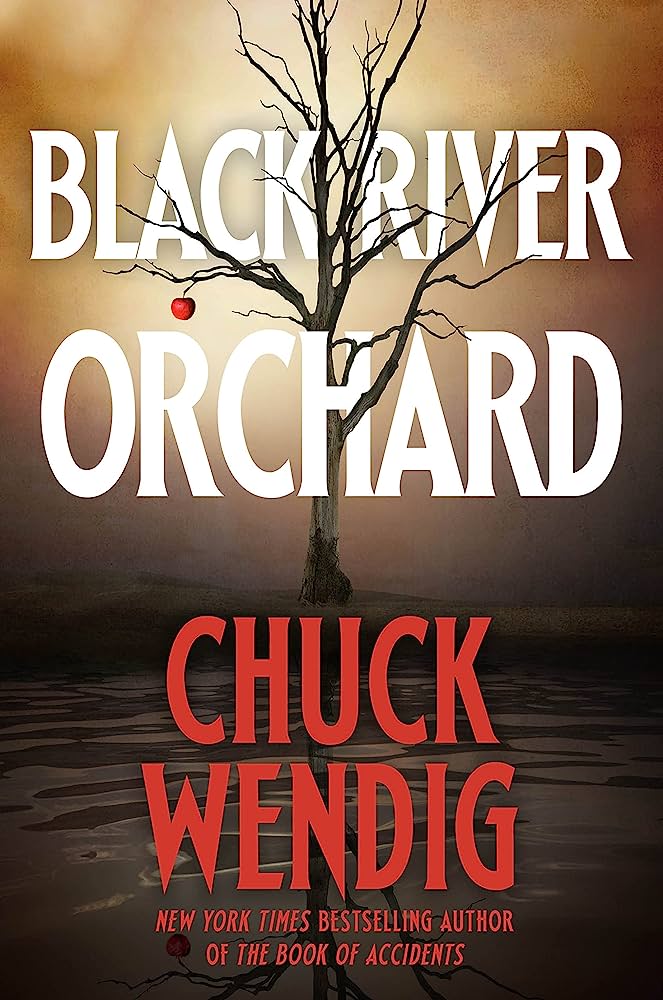
Black River Orchard, Wendig’s forthcoming novel, is a return to horror, and it might be even better.
The novel is set in Harrow, a small Pennsylvania town, with an apple orchard of just seven trees. The apples from that orchard are special—a rich red, nearly black, with a flavor that’s intoxicating, even addictive. In this case, “addictive” is literal, because the apples make one feel better, stronger, more confident, more in control. Unfortunately, there’s a dark side to that addiction, to eating these apples, and it soon begins to consume Harrow, to tear the very fabric of the town to shreds. What starts as a mystery involving something that roils to the surface of the river that runs through town, blossoms, like a poisoned flower, into a riveting, heart stopping battle between good and evil for the soul of the entire town.
As with The Book of Accidents, Wendig excels here at introducing a wonderful, varied cast of characters. He takes the time for you to get to know them, but all the while he’s setting his wheels into motion, connecting one to another like the roots of an apple tree. None of his characters are one-dimensional—they are loving and caring, but they are also difficult, confrontational, and obsessive. When the apples begin to work their dark magic on them, I found myself rooting for them to resist, to fight the good fight, and cheering when some of them did.
Because evil almost always has an antecedent, Wendig is also telling a generational story, with chapters that go back centuries. I loved these parts of the novel—they give it depth and verisimilitude. They give the evil a name and a backstory.
If you’re a fan of body horror, which I am, Black River Orchard goes to places that may haunt your dreams, and make you think twice about picking up an apple.
If you’ve followed Wendig on social media, you know that he has an interest and knowledge in heirloom apple varieties. He uses that knowledge to great effect here, weaving it into the fabric of the novel, making apples themselves another character.
So, too sum up: Black River Orchard is a masterful work of horror from an author working at the top of his game. It releases September 26, and is available for pre-order now. Don’t miss this one.
I belong, as a contributing member, to a talented group of writers who are responsible for A Muse Bouche Review, a literary newsletter. It gives me a chance to write something new each month around a given theme, which I’m enjoying. The theme for June, 2023 is Running Away and my contribution this month is a song lyric titled Follow. Here’s how it starts:
My pick-up truck gave up the ghost just outside Junction City Left it there, no burial, I guess death is never pretty Walked twenty miles through corn and wheat as far as the horizon I know that it’s good exercise, but I wish I was still drivin’ Sad and sleepless in a Motel 6, waiting for the break of day Out of luck, and that damn girl is still half a state away
She said, Call me a dreamer, call me a fool Prove that you love me as much as I love you Come climb a mountain and lay down beside me Follow my trail to the love that’s inside me Leave that life behind and start everything new
My friends, mark down August 16, 2023, on your calendar, app, post-it note, written it in lipstick on your medicine cabinet mirror, or however you keep track of such things—that’s when Things Get Ugly: The Best Crime Stories of Joe R. Lansdale releases. You’ll want to take the day off, settle into a comfortable chair (or onto a barstool, you do you) with a tumbler of good scotch within reach, and prepare yourself to get lost in one of the best collections of crime fiction I’ve ever read.
There are 19 stories here, each one a poisonous gem, and before I call out a few individual stories, some general thoughts: • Because Lansdale is so versatile, and so prolific, it’s easy to forget just how good he is in the various genres he calls home. He is, without a doubt, a master of crime fiction. • The title Things Get Ugly is extremely apt—These are dark, dark stories that explore the ugly side of life, the sordid alleys of human existence. Believe me when I tell you that these are harrowing tales teeming with revenge, murder, and all manner of appalling behavior. There aren’t really any heroes here, just criminals of different shades and degrees. • Having said that, the profane, laugh-out-loud humor Lansdale is famous for is very much in evidence. Gallows humor, but still humor. • Because I’ve read my fair share of Lansdale, I was afraid I’d find that I had read many of the included stories. Happily, that was not the case. These stories are drawn from throughout Lansdale’s long career, and most were new to me. And the ones I had read before, I still found myself diving right in, like visiting old, much-loved but ne’er-do-well friends. • Although the Hap and Leonard novels and stories certainly fall into the category of crime fiction, those two gentlemen do not make an appearance here. They have their own much-deserved story collections (Hap and Leonard, Born for Trouble, Blood and Lemonade, Of Mice and Minestrone). If you haven’t read them, why the hell not? Get on that.
On to some of the stories. I’m not going to mention all of them (every one hits hard and strong), but here are a few of my favorites:
Driving to Geronimo’s Grave Yes, this one involves a rotting corpse, but it’s one of the lighter stories in the collection, and it’s damn funny while still keeping the tension ratcheted up.
Mr. Bear I can’t even begin to describe Mr. Bear. No, seriously. There’s an anthropomorphized bear with some terrible habits. Bad, bad things happen.
The Shadows, Kith and Kin This one drags you kicking and screaming into the mind of a killer. Left me feeling very unsettled.
I Tell You It’s Love Lansdale plays with pulp fiction tropes throughout this collection, and I Tell You It’s Love is one of the pulpiest. Short, sordid, and brutal.
Boys Will Be Boys A portrait in acid of two teenage boys on the road to hell. Deeply disquieting, it feels like something Andrew Vachss would have appreciated.
Drive-In Date Possibly the most disturbing story in the collection, and that’s saying something. You’ve been warned.
Incident On and Off a Mountain Road I’ve saved my favorite for last. This is a stone cold classic, literally one of the best pieces of crime fiction ever written, with a twist you won’t see coming. Worth the price of the book all by itself.
Like I said, these are some of my favorites, but they’re all excellent, and your list of favorites may be completely different. As an added bonus, there’s an introduction by S.A. Cosby, one of today’s best crime writers.
Things Get Ugly: The Best Crime Stories of Joe R. Lansdale is available for pre-order now. Don’t miss out on this one.
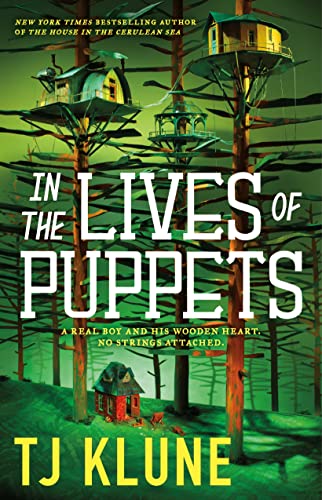
In The Lives of Puppets is the first book I’ve read by TJ Klune, which is probably a little shocking considering the buzz generated by his previous books, particularly The House On the Cerulean Sea and Under the Whispering Door. I’m going to remedy that going forward, as I absolutely loved this novel.
What exactly is In The Lives of Puppets about? Glad you asked! In broad strokes, it’s about a human boy, Vic, who lives in a remote forest in a collection of eccentric treehouses with three robots—a nurse machine whose words are sharper than the drill she’s aching to use; a vacuum machine who is seeking love and acceptance with alarming enthusiasm; and an inventor android who is a father figure for Vic. This group spends their time living, inventing, and scavenging useful things, including another robot, from a massive, mysterious salvage yard. Then the robot overlords who rule the land discover their secret existence, sending them on a perilous journey of survival and discovery.
Did I mention In The Lives of Puppets is an imaginative, heartfelt reimagining of Pinocchio, with a little bit of Wall-E thrown in for good measure?
If that’s all the story was, it would be an excellent read. However, it’s in the small strokes, the fine details, that In The Lives of Puppets truly sings. It’s about the importance of found family, and the power of loyalty and love. It’s a tender, sensitive exploration of Ace and LGBTQ representation. Perhaps most surprisingly to me, it’s laugh-out-loud funny. The robots, particularly the nurse machine, are hilariously sarcastic.
Klune is a wonderful writer—evocative and playful, yet with a surprising edge. In The Lives of Puppets tugged at my heartstrings and pulled me forward on waves of emotion and excitement. I was happy to be along for the ride every step of the way.
I’ve joined a talented group of writers as a contributing member of A Muse Bouche Review, a literary newsletter. It gives me a chance to write something new each month around a given theme, which I’m enjoying. The theme for May, 2023 is Regret and my story is called Bagged. Here’s how it starts:
PAUL HAD PLENTY TO REGRET, but it was at least partly the witch’s fault.
There were other contributing factors. Paul’s friends had convinced him that a new club in the Industrial Flats was the place to be for a steamy summer night costume party. Regret number one. They had goaded him into wearing the wool Sherlock Holmes costume that was now causing him to sweat and itch uncontrollably. Regret number two. And alcohol had been involved; definitely regret number three.
It was the sight of the witch across a dance floor crowded with trendy, costumed partiers, however, that had caused his present, and absolutely regretful, predicament. He had caught just a glimpse of her; alabaster skin, raven black hair that refracted the spinning lights like a prism, the flash of a slim yet curvy body between the folds of her black satin cape. Beneath the cape a Moebius strip of leather, lace and chrome that revealed more than it concealed. Her boots were leather, intricately laced; wickedly high heels that pulled the sleek muscles in her calves taut. She held a mysteriously oversized black leather purse protectively against her body.
The witch was dancing by herself, spinning in slow, looping circles. Her body seemed to catch and hold the music, like each note was her own private lover.
I came late to the Josh Malerman party, when I read Daphne last year. Here’s how I opened my review of that novel, which I now believe is a new horror classic:
“I have a confession to make…this is the first novel I’ve read by Josh Malerman. I blame all the wonderful writers out there writing all the wonderful books. After reading Daphne, Malerman’s brutal, terrifying new novel, I’ll be happily dipping into his back catalog, because this book rocks. It’s part serial killer novel, part slasher, part urban mythology, and part coming-of-age. Oh, and it’s scary as hell.”
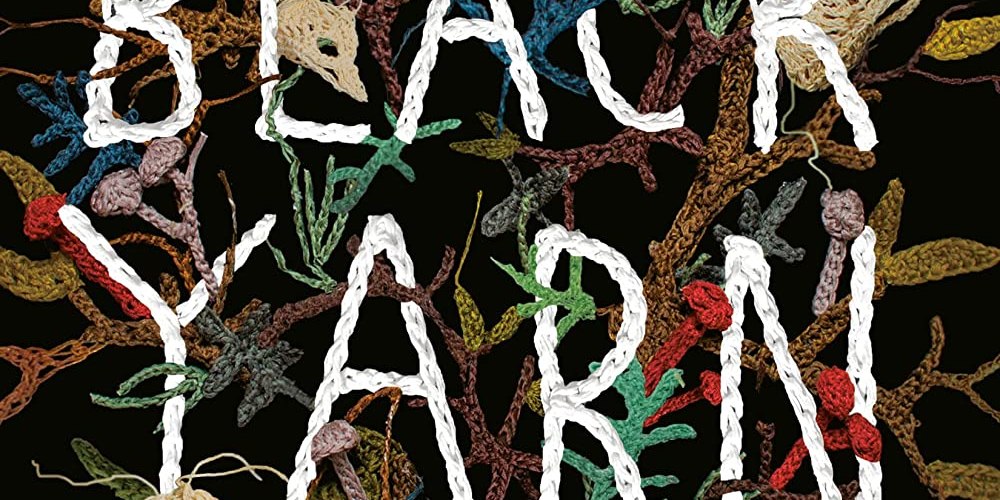
Spin a Black Yarn, his newest book, is a collection of five novellas, and I’m happy to report that Malerman is working at the top of his game here—every novella here is a masterpiece of story, mood, and characters in perfect synchronization. Malerman isn’t a one trick pony. There’s horror here, absolutely, but there’s also science fiction and fantasy. What all five stories share is a sense of unease and disquiet that seeps off the pages, through your eyeballs, and right into your brain meat. Malerman isn’t afraid to shred your nerves and tickle your gag reflex at the same time. He makes your feel things.
Without giving away too much, here’s a quick overview of the stories. By they way, they’re not connected, but each is set in the small Michigan town of Samhattan, throughout a variety of time periods.
Half the House is Haunted A dialogue of sorts, with alternating POVs, between two sisters, from when they are very small until end of life. They’re the main characters, but the house of the title is just as much of a character, and you’ll find yourself questioning just where the palpable sense of evil the permeates the story is emanating from. This one will burrow its way under your skin.
Doug and Judy Buy the House Washer™ One of the two science fiction stories here, with a fascinating and very much science fictional central concept, but it reads more like the savage dissection of a toxic marriage between two toxic people who are clearly meant for each other. Claustrophobic and uncomfortable, as if we’re eavesdropping on something profoundly intimate.
The Jupiter Drop Science fiction, until it becomes something else altogether, a hallucinogenic journey into fantasy that will have you questioning what’s real and what’s not.
These next two are my favorites in the book, and I think they will join Daphne as stone cold horror classics.
Argyle The confessions of a dying man to his family. That’s all you’re getting from me. Read it, and good luck trying to get it out of your head. you may find yourself looking into the face of every stranger you pass, and wondering just what horrors reside within them.
Egorov This is the longest novella here, and it’s a masterpiece. The story of the death of one adult triplet and the lengths his two remaining brothers will go to in the name of vengeance, Egorov reads like an unholy amalgamation of Kafka, Tolstoy, and Dickens, with a healthy dose of Poe’s The Telltale Heart.
Spin a Black Yarn debuts August 15th, 2023, and is available for preorder now. For fans of dark fiction, this is a must-have.
Prior to reading Whisperwood, I knew Alex Woodroe as an excellent editor and a tireless supporter of indie authors. I had read one short story by her, “Searching for Uberwald” in the excellent collection, It Was All a Dream—in my review I called it a story steeped in Romanian folklore, lyrical and haunting.
Whisperwood is all that and so much more, a tale awash in mystery and magic, with a cast of characters who are achingly real whether they’re human or not. The novel is timeless, set sometime in a rural, Eastern European distant past, although clues make it clear there are larger towns in existence.
Anna is a young woman fleeing a toxic relationship from a man who nearly killed her and then poisoned her entire world against her, convincing them she’s a witch. She’s trying to get lost, to both save herself and maybe find a purpose. The place she finds is the small, mysterious village of Whisperwood, a place so isolated, so insular, that it’s hard to find and even harder to enter.
She discovers a village in turmoil, a liminal place where deep folk magic coexists tensely with another world, an uneasy balance that can’t hold. Before long she’s embroiled in events spinning wildly out of control.
Woodroe’s language is evocative—she draws you into her world and keeps you hanging on every word. Her characters, particularly Anna, are fully realized. In fact, I fell a little in love with Anna. She’s flawed and unsure of herself, but also brave as can be, with a hidden reserve of strength that she shares with everyone around her. Woodroe’s setting, absolutely saturated with magic, is well-thought out and intriguing. This may be a first novel, but it doesn’t read like it.
Whisperwood release July 13, 2023, and is available for pre-order now. Meanwhile, I’m already looking forward to her next novel.
I’ve joined a talented group of writers as a contributing member of A Muse Bouche Review, a literary newsletter. It gives me a chance to write something new each month around a given theme, which I’m enjoying. The theme for April, 2023 is Expectation and my contribution this month is a song lyric called Heaven (Better Be Something Special). Here’s how it starts:
We haven’t spent a night apart Since I first took your hand in mine Our lives forever joined together Like grape vines intertwined We’ve driven down some bumpy roads Without a light, without a map The two of us we always knew We’d somehow make it back
I don’t need a choir singing I don’t need angels winging I don’t need a cloud with a view Heaven better be something special To be half as good as life on earth with you I don’t need those golden gates I’m in no hurry, I can wait I don’t need a sign to know it’s true Heaven better be something special To be half as good as life on earth with you
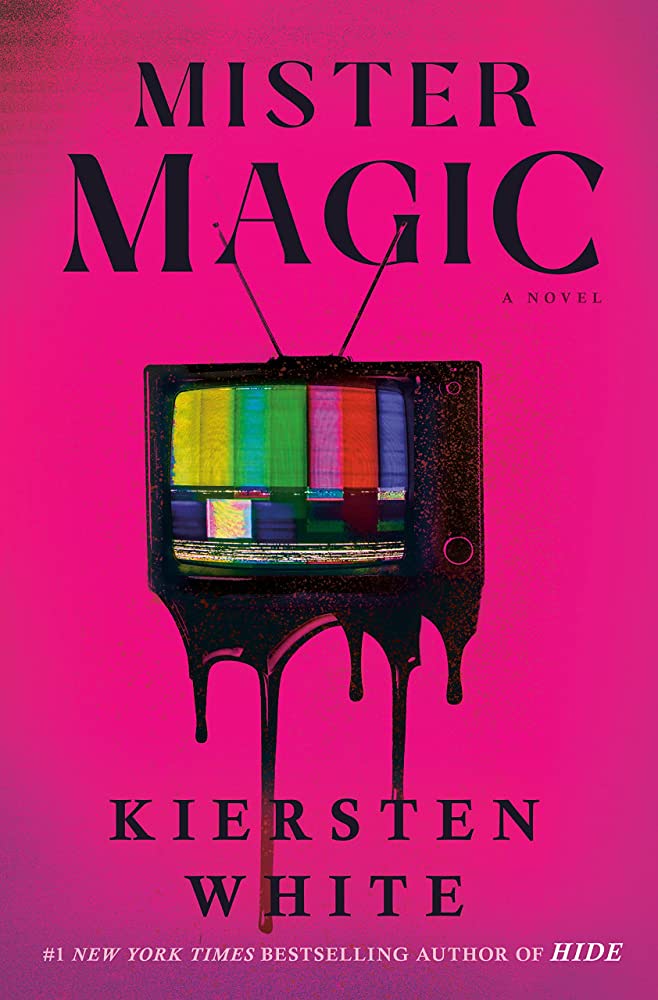
I discovered Kiersten White last year when I read her excellent novel, Hide (my review here: https://davewritesanddraws.com/2022/01/17/arc-review-hide-by-kiersten-white/). Hide was a delight from beginning to end, a high-tension thriller with a supernatural twist that still managed to have important things to say about trauma and families, both the ones we’re born into and the ones we find.
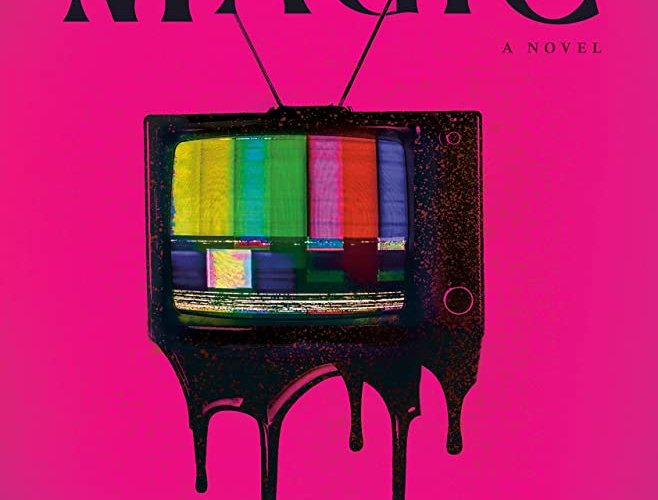
The good news is, I think Mister Magic might be even better. The novel starts with one of the best first chapters I’ve read in a long time, a mysterious, evocative opening that establishes the tone for the rest of the story. The best way I can think of to describe it is a feeling of malevolent nostalgia, but that only scratches the surface. This is one helluva book.
What is Mister Magic about? I’m only going to give you the bare bones, because what’s important here, at least to me, are the characters, their relationships, and the darkly magical mood White creates and sustains for 304 pages. It’s not that White doesn’t tell a compelling story with a tightly wound plot that pulls you forward. She does, indeed. It’s just that Mister Magic is much more than that.
So, the bare bones: thirty years ago a classic children’s television show came to an abrupt end when tragedy struck. The funny thing is, while the show is fondly remembered by a generation of kids who grew up with it, those memories are shaky, hazy at best, and contradictory. Even stranger, in these days when just about every piece of popular culture in existence is available with the stroke of a few keys, the Mister Magic show has vanished without a trace. Now the five cast members—children then, adults now—have been reunited under mysterious circumstances.
And that’s all you’re going to get.
Those cast members, each and every one of them damaged in one way or another, unite to face a seductive, evil force that stole their childhoods away, sunk hooks into their psyches that are still there to this day. I mentioned that Hide dealt with trauma and families. Mister Magic does, too, in a way, but here it’s layered with guilt, regret, and ultimately with hidden reserves of strength and bravery despite the odds. Like I said, this is one helluva book.
One last thing—even if you don’t usually, be sure to read White’s afterward. It adds even more depth and nuance to an already beautifully written story.
Mister Magic releases August 8, 2023, and is very much worthy of a pre-order.
I’m going to sound old fashioned here, but so be it—Matt Ruff’s Lovecraft Country was a humdinger of a novel. Ruff somehow combined the very real dangers a family faces in Jim Crow America with H.P. Lovecraft’s patented cosmic horror, and a secret cabal of powerful magicians, and crafted a novel that hurtled like a runaway freight train from beginning to end without ever careening off the track. The fact that Ruff did all that while also acknowledging, and slyly tweaking, the well-known fact the Lovecraft was an unrepentant racist just makes it that much more fun.
With The Destroyer of Worlds—a Return to Lovecraft Country, Ruff dives head first back into the singular world he’s created, and it’s even more gonzo, more chaotic, and if anything even faster moving. Atticus, Montrose, George, Horace, Hippolyta, Letitia, and Ruby are back, criss crossing the country from the swamps of North Carolina to the desert of Nevada, and other worlds as well, in a whirlwind of action. The danger they are all in is, if anything, even greater, as Caleb Braithwhite is back, thirsting for revenge.
As with Lovecraft Country, the dangers come from all corners—wicked magicians, otherworldly creatures, ghosts, and sadly, the altogether true perils of Jim Crow era racism. Evil is evil, no matter what reality it comes from.
The Destroyer of Worlds—a Return to Lovecraft Country is more fun than a barrel of old-world tentacled gods, but make no mistake—Ruff drops the reader into the deep end without a life preserver. If you haven’t read Lovecraft Country, please read that first before tackling the new novel. Otherwise, you may find yourself occasionally confused.
The Destroyer of Worlds—a Return to Lovecraft Country is an audacious, thrilling, and pulpy (in the best way) novel that manages to attack and dissect many uncomfortable truths from our not-so-long-ago past. Give it a read. Not only will you love it, but doing so would piss old Herbert Phillips off.
I’ve joined a talented group of writers as a contributing member of A Muse Bouche Review, a literary newsletter. It gives me a chance to write something new each month around a given theme, which I’m enjoying. The theme for March, 2023 is Anticipation and my story is called Delphine’s Pillow. Here’s how it starts:
THE SWAMP WAS DIFFERENT in Ohio, different from what they’d crawled through in Louisiana.
Down there they were wet more often than they were dry. They’d be waist deep in the muddy water, weaving between cypress trees draped with Spanish moss. Snakes big around as a man’s arm hung from the trees, and the hot, thick air hummed with mosquitoes.
Third night on the run a gator took Leon. Leon was six. One minute he was stepping down off one of the rare dry, grassy hillocks where they had stopped to rest, trying not to lose his footing on the slick cypress roots and go under. Then an alligator had its jaws clean around his narrow chest and started to roll, tail thrashing, roiling the water, red blood mixing with the brown.
Judah planned their escape for months, starting right after his wife Mina died of an infection that went bad. The overseer had begun to take an interest in his daughter Delphine, not yet thirteen. Judah would not abide that. He gathered what food he could—they would have to make it through the swamp and all the way to the station in Jackson. An old woman named Maria had helped keep an eye on Delphine after Mina died, and Judah promised to take her and her grandson Leon along.
The four of them slipped away quietly the night of a party at the big house, losing themselves in the festive chaos. Judah had the food and the clothes on his back, Maria a small bible. Delphine carried a burlap sack that held her mother’s pillow.
When I reviewed Growing Things and Other Stories, Paul Tremblay’s first collection of short fiction, I had this to say:
“Just as harrowing as his novels, yet far more experimental, the stories here keep you off balance. Unsettling in the best way.”
I stand by that description with his newest collection, The Beast You Are. If anything, this collection is more—more harrowing, more experimental, more unsettling. If you’re a fan of Tremblay (and at this point, anyone with even a passing interest in horror fiction should be), then you know his novels delve deeply into horror, of both the visceral and psychological kind. The amazing thing here is that few if any of these stories are straight-up horror. They occupy a sort of liminal space where the disturbing, the disquieting, the disruptive, and yes, the frightening, coexist with bravura, innovative, and unconventional storytelling. The result is an anthology of short fiction that sucks you in while keeping you off balance. No matter how far off the beaten path Tremblay travels, he never loses his way. This is a high wire act that he nails.
Honestly, that’s all I want to say about The Beast You Are as a whole. It’s one of the best, most satisfying collections I’ve read in a long time. In fact, between this and the last book I read, Eric LaRocca’s brilliant short story collection The Trees Grew Because I Bled There, I feel like I’m on an exemplary short fiction roll. Yay, horror!
What I do want to do is call out a few of my favorite stories. These are the ones that I keep coming back to, that have stayed with me since I finished the book.
Ice Cold Lemonade 25¢ Haunted House Tour: 1 Per Person—Starts the collection off on an extraordinarily high note with a creepy, yet weirdly nostalgic tale in which Tremblay himself is the main character.
The Postal Zone: The Possession Edition and Red Eyes—Two stories that call back to, and include characters from, Head Full of Ghosts, the first novel by Tremblay I ever read, and still one of the most terrifying. The Postal Zone in particular is worth the price of admission all by itself.
House of Windows—A strange, hypnotic story with almost a Twilight Zone feel, if Rod Serling was feeling particularly absurdist.
The Last Conversation—I read this one, then went back to the beginning and read it again. Written in intimate, oppressive second person. Profoundly unsettling.
The Large Man—Feels like a long-lost classic from Kafka.
The Beast You Are—Of the many excellent stories here, I think this is the one people are going to be talking about. A novella written in free verse, The Beast You Are is almost impossible to describe, but I’ll give it a try. It’s as if Grimm’s Fairy Tales, Aesop’s Fables, Animal Farm, and The Lorax were put into a blender, then poured out onto page after page of stunning, transcendent language.
Finally, Tremblay ends the collection with the kind of detailed story notes I’m a total sucker for. Don’t miss them.
The Beast You Are debuts July 11, 2023. Pre-order it now, so you don’t miss it!
I discovered Eric LaRocca just last year, with the one-two punch of Things Have Gotten Worse Since We Last Spoke and Other Misfortunes, and We Can Never Leave This Place. I had this to say about that second amazing book:
If, through some infernal alchemy, the DNA of Franz Kafka, William Burroughs, and Clive Barker, were combined, and the resultant child was raised in a haunted house, on a steady diet of Hershel Gordon Lewis and David Cronenberg movies, EC and manga comics, Grimms’ fairytales, and powerful hallucinogens; and if that child grew up to be a writer, they might, just might, create something like We Can Never Leave This Place.
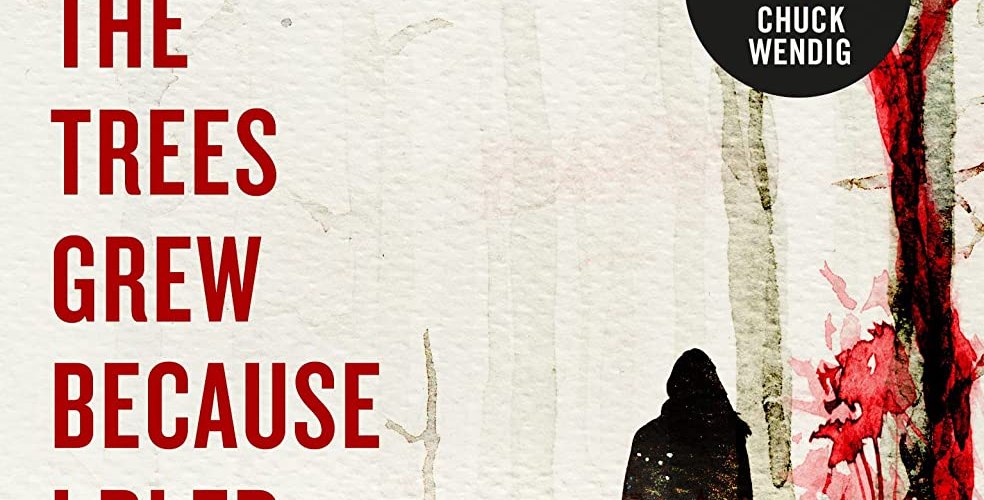
After devouring LaRocca’s newest collection of eight short stories, The Trees Grew Because I Bled There, I’d like to add the DNA of two more authors—Poppy Z. Brite and Roald Dahl. Like Brite, LaRocca is both uncompromising and unflinching in his descriptions of the horrors humans are capable of inflicting on each other. In fact, the last time I read a book that gave me this level of—let’s call it exhilarating discomfort—was while reading Exquisite Corpse. And like Dahl, LaRocca’s characters are acid tongued and black hearted.
The stories themselves are, each and every one, disquieting and unnerving. Despite the varied settings, they are weirdly intimate in nature, rooted in despair and trauma. Happiness is in short supply here. Like I said, exhilarating discomfort. They are also clearly and unapologetically queer. There is gut-wrenching body horror, and LaRocca never allows you to look away.
The stories are uniformly strong, but I do want to call out a couple that truly got me. Bodies Are for Burning is near the beginning of the book, and it lets you know just what you’re in for. It will fuck you up. The Strange Thing We Became is a devastating, desperate portrait of disease and loss. And Where Flames Burned Emerald as Grass is a fever dream as horrible as it is inevitable.
The Trees Grew Because I Bled There releases March 7, 2023, and is available now for pre-order. For fans of uncompromising horror, this is a must.
My son and I were lucky enough to be in the audience this past fall at WorldCon in Chicago when Seanan McGuire was awarded the Hugo for best series, for Wayward Children. I was thrilled to be there to witness the bestowing of such a well-deserved award. Since I first read Every Heart a Doorway, I’ve looked forward to the beginning of each year as it comes, not just because I hope it will be better than the last dumpster fire of a year, but because I know there will be a new Wayward Children book on the way.
The books of the Wayward Children series, of which Lost In the Moment and Found is number eight, fall roughly into two categories—group stories, in which we follow one or more characters we’ve met before, and stand-along, bottle stories. Lost In the Moment and Found is one of the stand-alones, and it’s an absolutely stunning addition to the series.
Antsy is a seven year old girl who chooses to run away from home, away from the mother she loves, because she senses that her new stepfather is going to hurt her if she stays, and her mother won’t believe her, won’t stop him. Like all the other wayward children, Antsy needs a Door, and so a Door finds her. It leads to a world unlike any we’ve seen before, the Shop Where Lost Things Go, a nexus of sorts where Doors to all manner of other worlds open every day.
Antsy is welcomed at first, accepted, protected. She feels safe for the first time in years. But safety comes at a price.
This is a story about innocence lost, and innocence taken. It’s a painful, somber meditation on childhood trauma, but it also celebrates the resilience and bravery of children who have faced things they should never be forced to face. McGuire is at her best here, writing a story that feels intensely personal to her. And McGuire at her best is one of the finest writers working today.
One note: McGuire includes a trigger warning at the beginning of this one, and for readers who have been touched by abuse, it’s warranted.
Lost In the Moment and Found is easily one of my favorite in the series. Don’t miss this one.
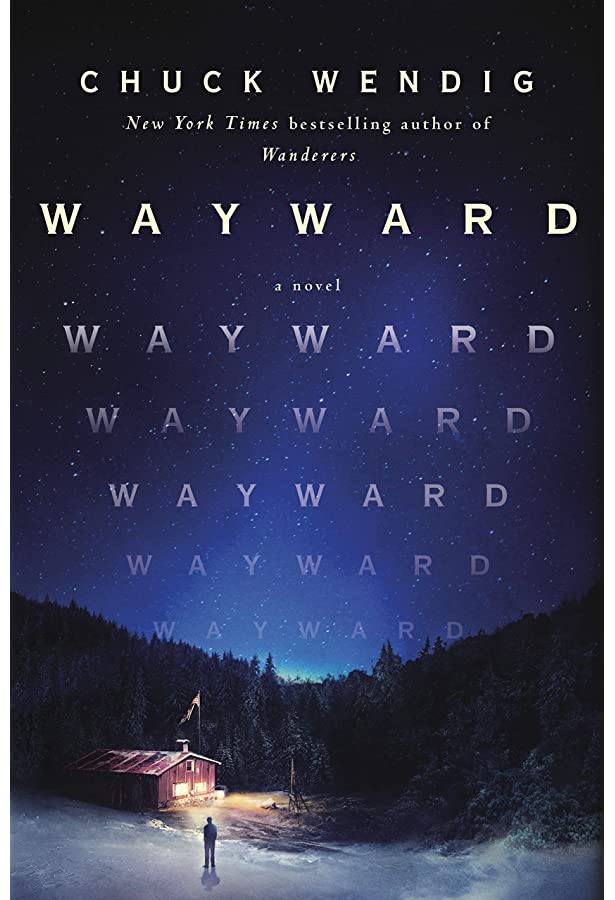
Chuck Wendig’s Wanderers, published in 2019, was a huge, satisfying, justly-acclaimed post-apocalyptic novel that immediately vaulted to the top of the post-apocalyptic pile. The word epic quickly comes to mind. It easily earned a spot on the same book shelf as Stephen King’s The Stand and Roberts McCammon’s Swan Song. In a bit of sweet serendipity, it was a pandemic novel released as an actual pandemic ravaged the world. It followed a large and diverse group of achingly real characters as they navigated the harrowing beginning of the pandemic, with Wendig’s trademark storytelling skill in full bloom.
The good news is that Wayward, the sequel to Wanderers, just may be better. While Wanderers chronicled the start of the pandemic, Wayward is set five years later, in a world decimated by what has happened. Many of your favorite characters—Benji, Shana, Marcy—are back, still fighting the good fight, still surviving against nearly insurmountable odds.
Unfortunately, forces of evil have also survived to wreak havoc on what is stubbornly left of civilization, from nazis and white supremacists to Ed Creel, the self-proclaimed president of a shattered country. Also along for the ride—Black Swan, the A.I. intimately involved with the apocalypse.
Wayward is just as epic, just as satisfying as Wanderers. Wendig excels at…well, he excels at many things. He creates fully realized, flesh and blood characters, and then puts both them, and you as the reader, through a harrowing, emotional ringer. He takes the time and pages needed to give a true snapshot of what the pandemic has done to various parts of the U.S., with both the main characters and in small vignettes that only add resonance to his story. Finally, in a novel filled with complex scientific concepts, he makes it easily understandable without dumbing anything down.
Wayward is a novel both grand and intimate in scope, not as easy thing to do, and Wendig accomplishes it with a mastery that’s more than a little awe inspiring. It easily belongs on that same bookshelf I mentioned in the beginning. Don’t miss this one.
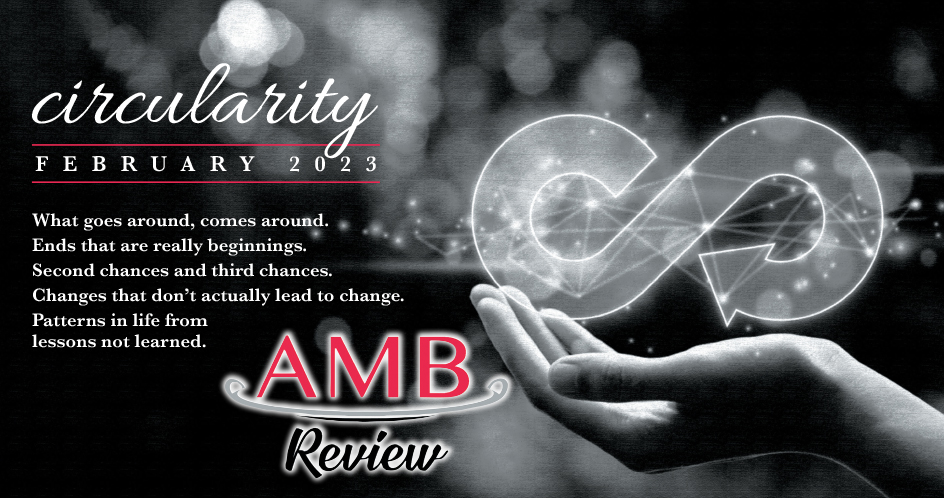
I’ve joined a talented group of writers as a contributing member of A Muse Bouche Review, a literary newsletter. It gives me a chance to write something new each month around a given theme, which I’m enjoying. The theme for February, 2023 is Circularity and my story is called TwelfthTime’s the Charm. Here’s how it starts:
DYING HURTS. DON’T LET anyone tell you different. The thing is, it doesn’t matter how you die—drifting off to sleep in your comfy bed after an excellent meal and a snort of brandy to warm your belly, or being torn apart by a pack of rabid honey badgers—it still hurts like the dickens. That’s because when you die, your soul, or whatever it is you call the invisible thing that makes you you—don’t go there, I’m not about to have that argument—it separates from your body. No, separates isn’t a strong enough word. It’s ripped from your corporal body, it’s cleaved away, it’s torn out at the roots. And take it from me, my friend, that fucking hurts.
I see that look on your face, you’re wondering how I could possibly know that. Tell ya what, buy me a fishbowl of Genny and a pickled egg from that jar behind the bar, and I’ll tell you my story. It’ll be well worth the six bits, that’s a promise.
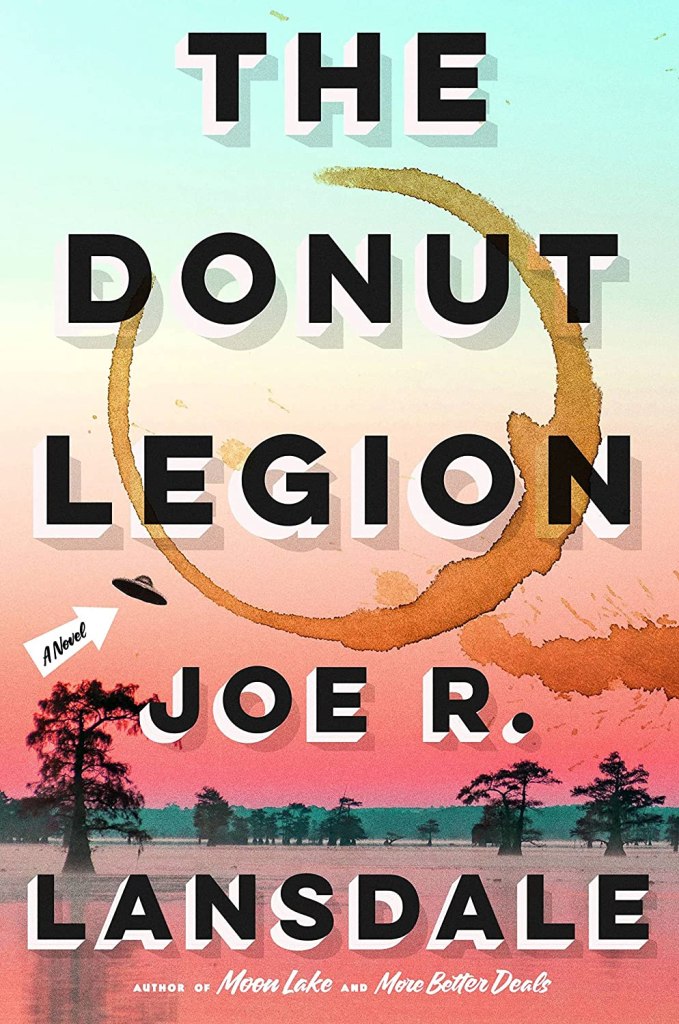
I’m going to put this right at the top where you can’t miss it—pre-order The Donut Legion now! The novel releases March 21st, 2023, but believe me when I tell you, this is one you want in your hands the second it’s available. For fans of Lansdale, for fans of top-notch crime fiction, for fans of addictive page-turners in general, The Donut Legion is more fun than a murderous chimpanzee in cowboy hat and boots with a penchant for tearing the arms and legs clean off folks.
Did I mention the novel features a murderous chimpanzee in a cowboy hat and boots with a penchant for tearing the arms and legs clean off folks? There’s also a possible ghostly visitation, a flying saucer cult waiting to be raptured by aliens, a warehouse allegedly stockpiled with weapons, assorted donuts, assorted psychotic bad guys, and a gorgeous redheaded journalist named Scrappy.
Charlie has an ex-wife named Meg he still has feelings for, so when she goes missing he gets a bad feeling. A retired private detective turned writer, Charlie enlists the help of his brother Felix (who took over the detective biz from him) and the aforementioned Scrappy to find Meg. The three are soon embroiled in a deadly game of cat and mouse with those saucer people and psychos. As the bodies pile up, Lansdale does what he does best, ratcheting up the tension in a tightly wound plot that grabs you by the neck and never lets go. The cool thing with Lansdale is, even as the story propels you forward, he never forgets to season it with large dollops of his trademark, often profane humor, much of it in the form of dialogue. The Donut Legion is a novel begging to be read out loud, preferably in an East Texas twang, just to hear those words sing.
Charlie, Meg, and Felix are my favorite Lansdale creations since Hap and Leonard. And, as usual, he surround them with a rogues gallery of characters as colorful as they are dangerous. The Donut Legion is a fast, fun, immensely satisfying read. Like I said, pre-order it now, and maybe take March 21st off of work for some you-time. You’ll be glad you did.
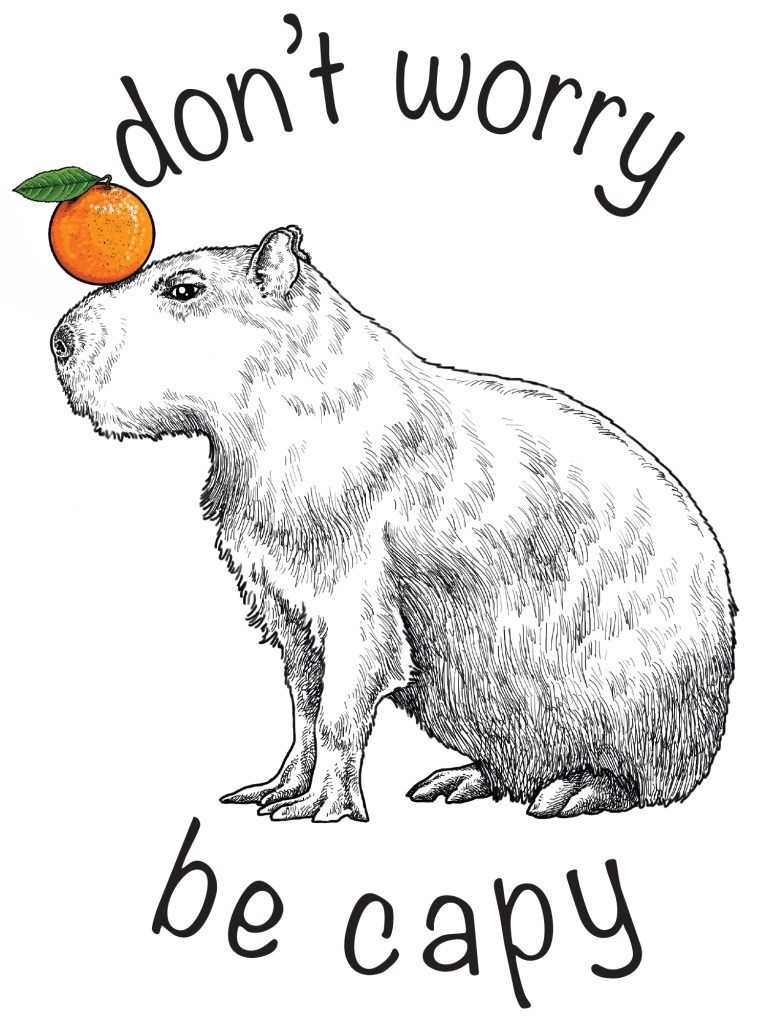
I’ve designed a lot of tattoos over the years, including for all three of my kids. One of my daughter’s friends (Hi, Matt!) recently asked me to design him an oddly, yet delightfully, specific thing: a seated capybara with an orange balanced on its nose. He’s very happy with the result, and I gotta say, so am I.
This past fall I joined a talented group of writers as a contributing member of A Muse Bouche Review, a literary newsletter. It gives me a chance to write something new each month around a given theme, which I’m enjoying. The theme for January, 2023 is False Promises and my story is called The Coyote and the Hitchhiker: A Noir Fable. Here’s how it starts:
________________________________________
THE BOBCAT HAD BEEN hitchhiking for hours.
His last ride, a long haul trucker with a load of sheet metal, dropped him at the Ely turnoff. Not a single car had passed since then. Now the two-lane highway seemed to levitate from the waves of heat shimmering off the blacktop. The Nevada sun looked like a swollen blister ready to pop, an irritation in the cloudless western sky.
The bobcat’s paws left sweaty prints in the breakdown-lane gravel as he walked. He carried a scuffed nylon duffle bag that seemed to grow heavier with each step.
When a low hum infiltrated his consciousness, the bobcat glanced back. A plume of dust stained the sky. The hum became a throaty growl, the dust plume morphed into a low-slung red sports car chewing up asphalt. The bobcat held up one paw and tried his best to look friendly, non-threatening, and slightly pathetic all at once. The car thundered past, then the driver stood on the brakes, fishtailing onto the berm. He threw it into reverse, and after the tires found traction the car slid to a shuddering stop next to the bobcat.
The bobcat admired the car while the driver reached across the passenger seat to roll the window down. It was an absolutely cherry condition Plymouth Roadrunner, the engine shaking like it could barely be contained at idle. The bobcat leaned his head into the window, and the icy kiss of air from the interior made him swoon with pleasure.
“Where ya heading, friend?” The driver was a coyote, the silver hairs wreathing his snout betraying his age. He slouched in his seat like it was a chaise lounge, his left paw draped over the leather-wrapped steering wheel, Ray-Ban Wayfarers obscuring his eyes as he looked at the stranger.
________________________________________
To read the entire story, and all the other stories from this talented crew, check out the January A Muse Bouche Review, available here:

























 Dave Writes and Draws